
Analyse 1B
This Phlow introduces learners to the foundational skill of comparing numbers by identifying which is bigger or smaller.
Bigger and Smaller Numbers
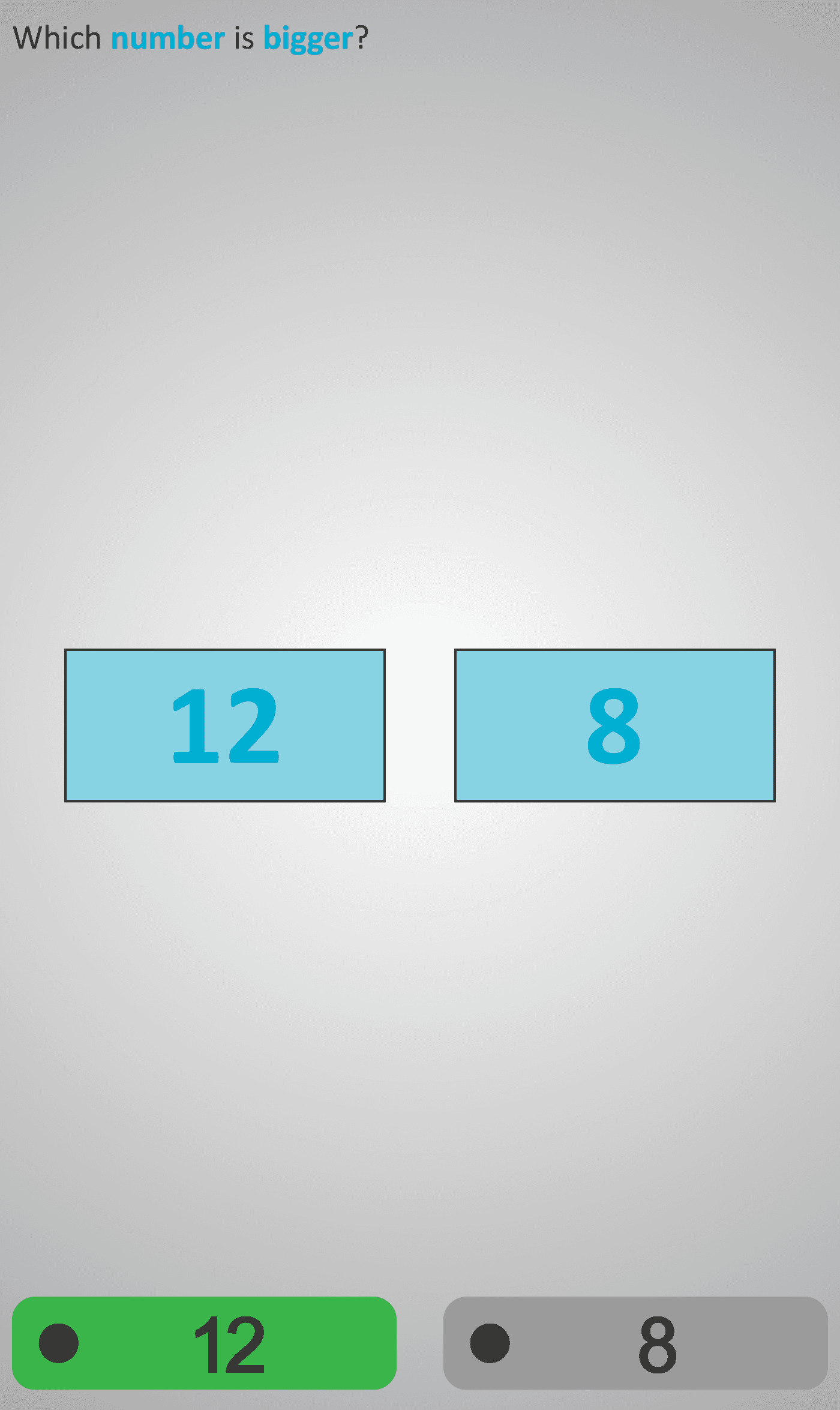
Students are shown two numbers side by side (e.g., 12 and 8) and asked which is bigger. In other cases, the prompt flips to ask which is smaller (e.g., 16 and 14). This alternating structure reinforces both concepts without adding extra complexity.
Building Number Sense
The questions span a range of values, from smaller single-digit numbers to larger two-digit numbers, helping learners practise flexible comparison across different scales. By consistently choosing between two options, students strengthen their sense of numerical order and relative size.
Reinforcement Through Repetition
Each task is fast to complete, giving immediate feedback while maintaining pace. Learners quickly internalise that comparing numbers is about recognising place value and magnitude, not guesswork.
This Phlow is designed to be quick, intuitive, and confidence-building. It develops the mental habit of comparing quantities accurately, laying the groundwork for more advanced tasks such as ordering sequences, estimating, and interpreting inequalities.
Prerequisite Knowledge Required:
[Analyse 1A: Counting and recognising sets of objects]
[Add 1: Early addition practice]
Main Category:
Number Sense / Comparison
Estimated Completion Time:
Approx. 6 seconds per question. 10 questions total. Total time: ~1 minute.
Cognitive Load / Step Size:
The step size is small and consistent—each question requires a single comparison of two numbers. This keeps cognitive demand low and avoids overwhelm, though it may feel repetitive if overused.
Language & Literacy Demand:
Minimal literacy demand. Questions are short (“Which number is bigger?” / “Which number is smaller?”). The key terms bigger and smaller are highlighted, ensuring accessibility even for weaker readers.
Clarity & Design:
Visually clean, with two numbers presented side-by-side in large, coloured boxes. The design reduces distraction and focuses attention on the comparison task. The highlight of the chosen option provides immediate clarity.
Curriculum Alignment:
Supports the Number strand in the Irish curriculum, specifically comparing and ordering whole numbers and understanding relative size.
Engagement & Motivation:
The task is quick, binary, and game-like. While simple, the immediacy of choosing and seeing feedback can be motivating for early learners.
Error Opportunities & Misconceptions:
- Students may misread digits (e.g., confusing 12 and 21).
- Rushing may cause incorrect choices without comparing carefully.
- Misconceptions about place value (e.g., thinking 8 > 12 because 8 is a “bigger digit”) may surface.
Transferability / Real-World Anchoring:
Highly transferable to everyday contexts—comparing prices, quantities, scores, or measurements.
Conceptual vs Procedural Balance:
Primarily procedural (practice in comparing numbers). However, it does reinforce the concept of numerical order and relative size, which underpins later place value and arithmetic.
Learning Objectives Addressed:
- Recognise and compare whole numbers.
- Understand and apply the concepts of “bigger” and “smaller.”
- Strengthen number sense and visual recognition of multi-digit numbers.
- Build speed and confidence in making quick comparisons.
What Your Score Says About You:
- Less than 5: You may still be developing comfort with comparing numbers; revisiting smaller ranges may help.
- Between 6–7: You can compare numbers but may rush or misinterpret occasionally.
- Between 8–9: Strong understanding with only minor slips.
- 10/10: Excellent fluency in comparing numbers; ready to move on to more complex ordering and place value tasks.