
Circle 1A
This Phlow introduces learners to the relationship between the radius and diameter of a circle through clear visual representations.
Building the Connection
Students are shown a circle with its radius labelled and asked to determine the diameter. By doubling the given radius, they discover the rule that the diameter is always twice the radius.
Applying the Rule
Examples vary in both size and units (e.g., 3 cm radius, 4 m radius), ensuring that students can generalise the concept across different contexts.
Clarifying Concepts
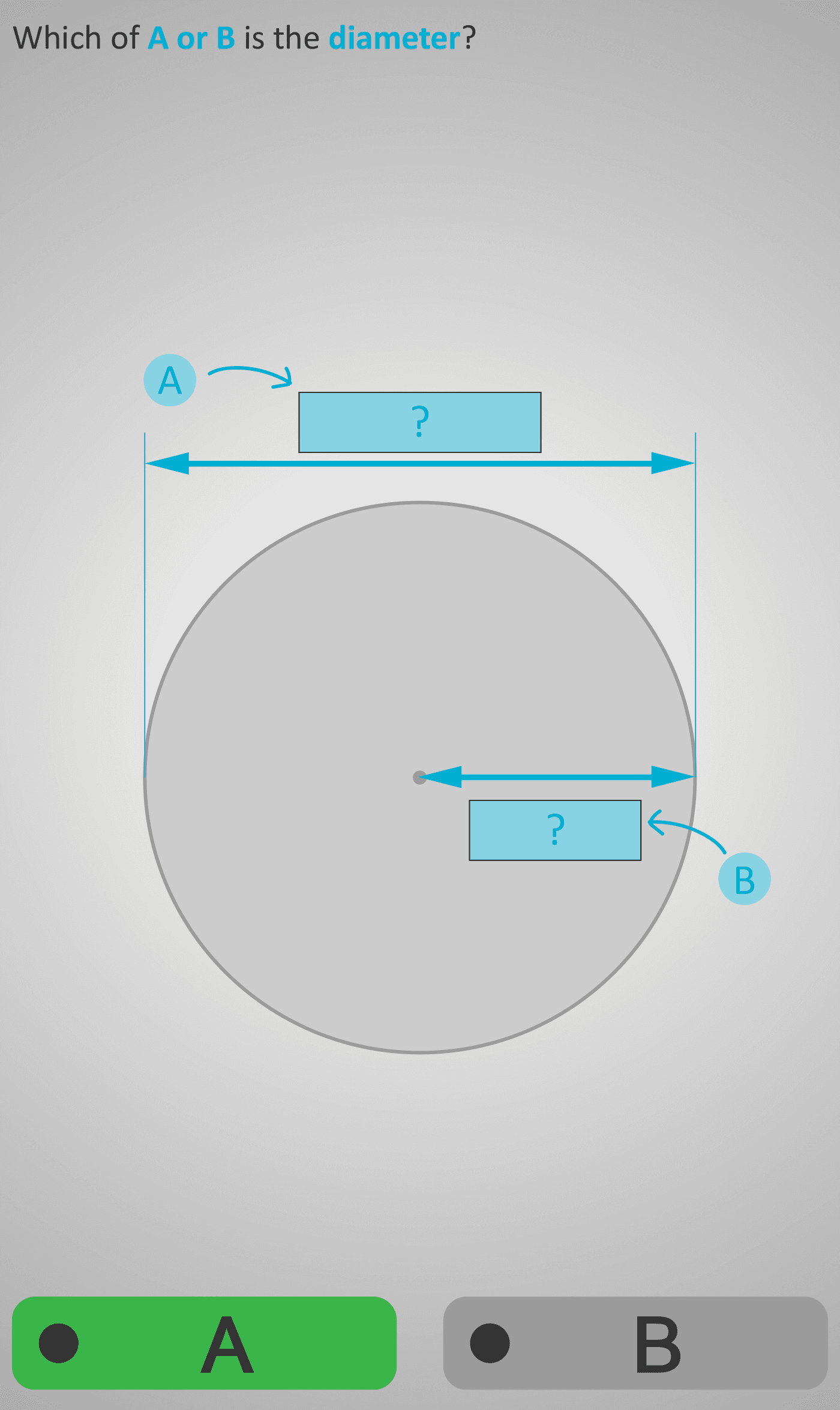
Learners are also asked to distinguish between the radius and diameter when both are shown in the same circle. This reinforces their ability to identify and name circle components correctly.
By the end, students understand that the diameter is twice the radius, can apply this to practical examples, and can visually distinguish between the two key measures of a circle.
Prerequisite Knowledge Required:
[Analyse 1A] Counting and recognising sets of objects
[Analyse 1B] Comparing numbers and understanding “greater than / less than”
Basic knowledge of length measurement (cm, m).
Understanding that a line passes through the centre of a circle.
Main Category:
Geometry – Circles and Measurement
Estimated Completion Time:
Approx 6 seconds per question. 10 questions total. Total time: ~1 minute.
Cognitive Load / Step Size:
The step size is small and manageable. Learners only need to grasp that the diameter is double the radius, applied consistently across different examples. The gradual variation (different numbers, units, and choosing radius vs diameter) keeps it from being repetitive without overwhelming students.
Language & Literacy Demand:
The text is minimal and supported by clear visuals. Keywords like radius and diameter are highlighted in colour, which reduces literacy barriers. Weak readers can still access the task because the graphics carry most of the meaning.
Clarity & Design:
Strong use of diagrams with arrows clearly marking radius and diameter. Visuals directly illustrate the maths concept rather than acting decoratively. Multiple-choice answers are simple and uncluttered.
Curriculum Alignment:
Irish curriculum strand: Geometry and Trigonometry → Learning outcome: identify, describe, and use the features of circles (radius, diameter, relationship between them).
Engagement & Motivation:
The tasks are straightforward but interactive, with instant feedback keeping students engaged. The use of different examples (changing numbers and units) prevents monotony.
Error Opportunities & Misconceptions:
- Students may confuse radius and diameter (e.g., mistakenly thinking the radius is the full distance across).
- May misapply “double” when units change (e.g., misreading 4m radius → 10m instead of 8m).
- Selecting the wrong labelled line (A vs B) in visual questions.
Transferability / Real-World Anchoring:
Yes. Understanding radius and diameter is essential in real-world contexts such as wheels, pipes, circular tables, sports fields, and construction measurements.
Conceptual vs Procedural Balance:
Balanced. Students build conceptual understanding (the relationship between radius and diameter) alongside procedural fluency (doubling or halving numbers).
Learning Objectives Addressed:
- Recognise and define radius and diameter of a circle.
- Understand and apply the relationship: diameter = 2 × radius.
- Distinguish visually between radius and diameter in diagrams.
- Practise applying the concept with different values and units.
What Your Score Says About You:
- Less than 5: You may still be unsure about the difference between radius and diameter. Review the diagrams carefully.
- Between 6–7: You understand the idea but may mix up doubling/halving in some cases.
- Between 8–9: Strong understanding, with only minor mistakes under pressure.
- 10/10: You clearly know how radius and diameter are related and can apply it confidently.