
Circle 1B
Prerequisite Knowledge Required:
Circle 1A – Radius and Diameter (finding the diameter from the radius)
Main Category:
Geometry
Estimated Completion Time:
Approx 6 seconds per question. 10 questions total. Total time: ~1 minute.
Cognitive Load / Step Size:
The step size is very manageable: students only need to reverse the relationship they practised in Circle 1A (halving instead of doubling). The transition is small, reducing overwhelm, but not so repetitive that it risks boredom, as it flips the operation.
Language & Literacy Demand:
Low. Questions are short and direct, supported by clear diagrams. Learners don’t need to parse complex sentences — the main challenge lies in interpreting the radius/diameter symbols visually.
Clarity & Design:
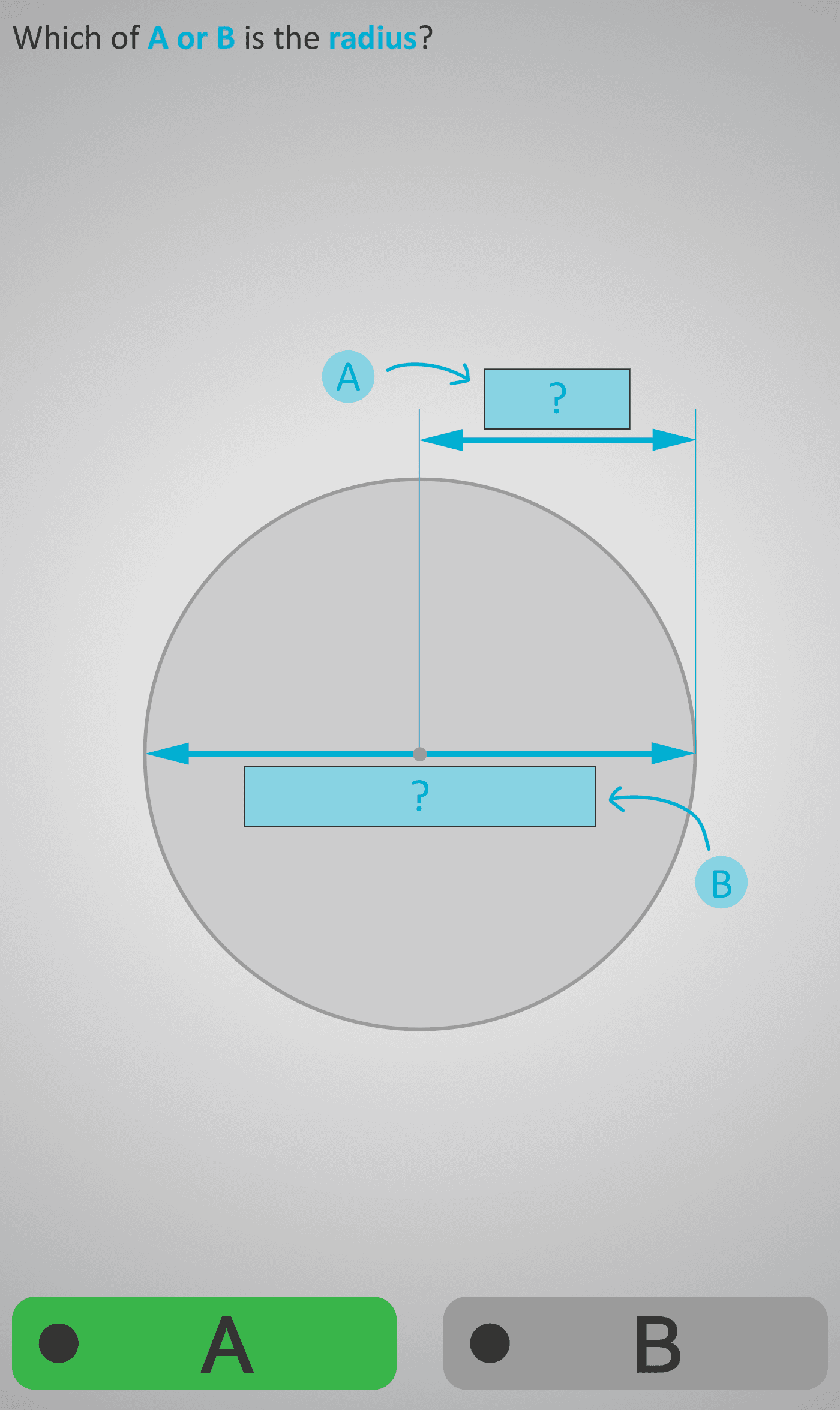
Strong use of visuals with arrows showing measurements. The comparison questions (e.g., “Which of A or B is the radius?”) encourage attention to detail. The diagrams are functional rather than decorative, directly supporting the concept.
Curriculum Alignment:
Aligned with the Geometry and Trigonometry strand, specifically the learning outcome: “investigate the relationship between the radius, diameter and circumference of a circle.”
Engagement & Motivation:
The clean design and interactive multiple-choice format keep the activity quick and game-like. While not “fun” in a narrative sense, the clarity and speed of feedback make it engaging for practice.
Error Opportunities & Misconceptions:
- Confusing radius and diameter (mixing up which is half or which is double)
- Misreading the diagram arrows (choosing the wrong line as the radius)
- Forgetting to divide the diameter by 2
Transferability / Real-World Anchoring:
Highly transferable to real-world tasks such as reading circle measurements in construction, design, or everyday objects (wheels, lids, clocks). Also prepares students for later work on circumference and area.
Conceptual vs Procedural Balance:
Balanced. Students practise the procedure (halving), but also strengthen the concept by identifying radius vs diameter in diagrams rather than just calculating.
Learning Objectives Addressed:
- Recognise the radius as half of the diameter
- Distinguish between radius and diameter in diagrams
- Apply proportional reasoning to circle measurements
- Build fluency in working with circle terminology and notation
What your score says about you:
- Less than 5: You may be confusing radius and diameter, or struggling with dividing by 2. Review Circle 1A for support.
- Between 6–7: You are beginning to understand the radius–diameter relationship but may mix them up occasionally.
- Between 8–9: You are confident with the relationship and only made small mistakes.
- 10/10: You fully understand how to find the radius from the diameter and can correctly identify both in diagrams.