
Numbers 1
Prerequisite Knowledge Required:
Basic counting (1–9). Linked Phlows: Count 1, Order 1.
Main Category:
Number Sense / Arithmetic Foundations
Estimated Completion Time:
Approx 6 seconds per question. 10 questions total. Total time: 1 minute.
Cognitive Load / Step Size:
Each question isolates one decision — choosing which of two numbers is larger. The step size is very small and intentionally repetitive to strengthen pattern recognition. Cognitive load is minimal, allowing automaticity in comparing numbers without distraction or calculation.
Language & Literacy Demand:
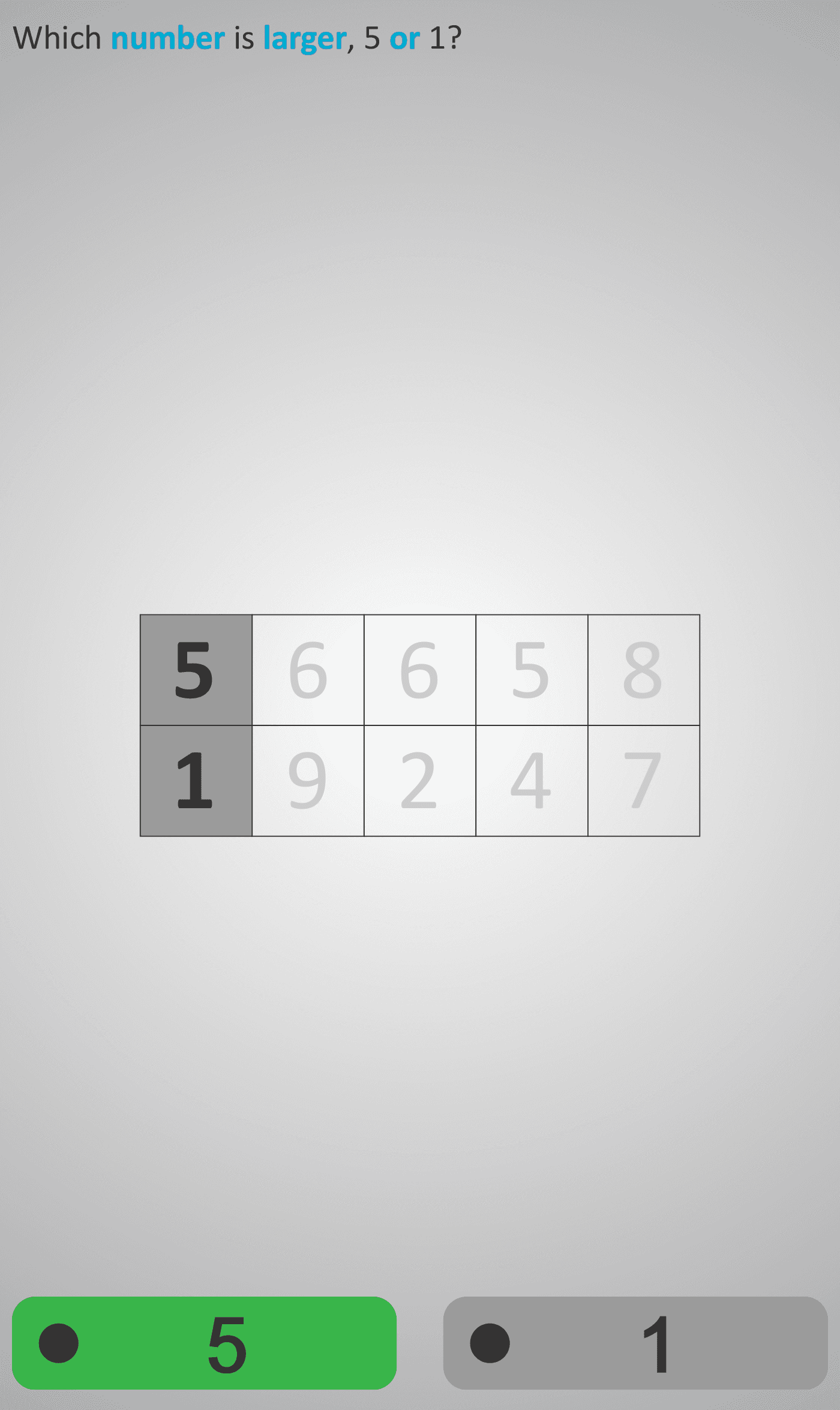
Text is extremely light and repetitive ("Which number is larger, X or Y?"). Vocabulary is simple, with numbers reinforced visually in the grid. Literacy demand is almost negligible; mathematical understanding can develop independently of reading skill.
Clarity & Design:
Clean, uncluttered visual design. The grid highlights only the two numbers being compared, using contrast and colour to direct focus. Visuals are functional rather than decorative, reinforcing the core idea of comparison through clear placement and grouping.
Curriculum Alignment:
Aligned with Number Strand – Comparing and Ordering: Identify, compare, and order numbers based on their size using visual and symbolic representations.
Engagement & Motivation:
The grid layout adds a mild puzzle-like quality, prompting visual scanning and attention. The fast-paced nature encourages flow for beginners — questions feel achievable, building confidence through instant feedback.
Error Opportunities & Misconceptions:
- Rushing and selecting the first number they see without proper comparison.
- Confusing “larger” with “appears higher on the screen.” Reinforce that numerical value defines “larger.”
Transferability / Real-World Anchoring:
Skills directly transfer to everyday number judgments — comparing quantities, prices, scores, or measurements. It’s a foundational skill for later work with inequalities and place value.
Conceptual vs Procedural Balance:
This Phlow leans procedural, but it implicitly strengthens conceptual understanding of magnitude through repetition and visual association. It prepares learners for introducing comparison symbols (>, <).
Learning Objectives Addressed:
- Identify which of two single-digit numbers is greater.
- Build fluency in number comparison through repetition.
- Strengthen visual recognition of numerical order.
- Develop automatic responses for “greater than” judgments.
What your score says about you:
- Less than 5: Still developing number comparison confidence — may need to review counting and number order.
- Between 6–7: Good progress — can usually compare numbers correctly but may hesitate on close pairs.
- Between 8–9: Strong grasp of relative value and quick visual comparison.
- 10/10: Excellent fluency — automatic understanding of number magnitude.