
Polygons 1B
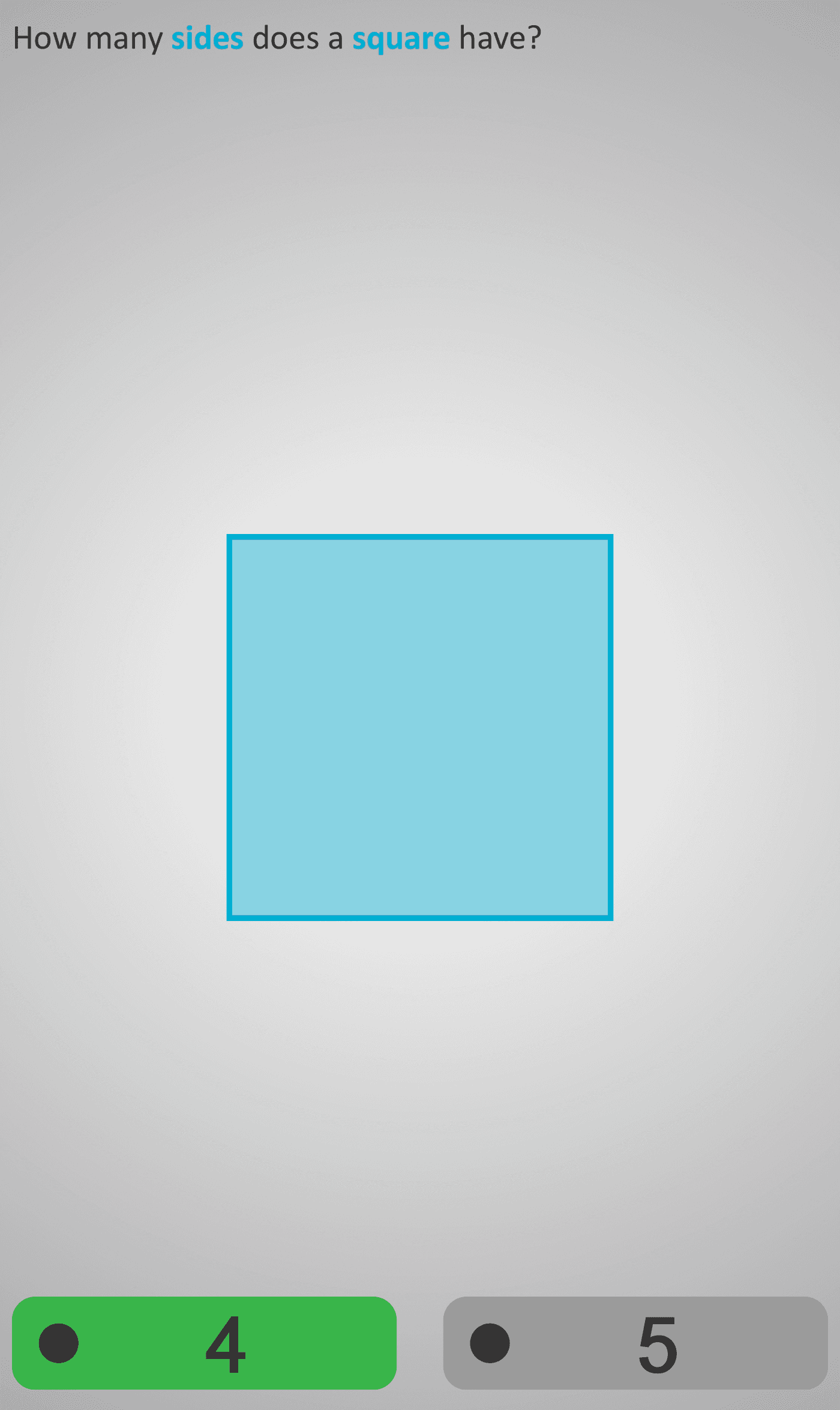
Polygons 1B extends students’ understanding of shape by focusing on the number of sides each figure has. Through clear, uncluttered visuals, learners count sides on familiar shapes like squares, triangles, and rectangles, progressing to combine quantities (e.g. two rectangles = 8 sides).
The questions reinforce how shapes are defined by their sides and angles, laying essential groundwork for understanding more complex polygons later. The clean design and repetition of structure minimise cognitive load while building accuracy and fluency in shape recognition and counting.
Prerequisite Knowledge Required:
- ✅ Polygons 1A — Identifying shapes by name (square, rectangle, triangle)
- ✅ Numbers 1 — Understanding numbers up to 10 for counting purposes
Main Category:
Geometry
Estimated Completion Time:
Approx. 6 seconds per question. 10 questions total. Total time: 1 minute.
Cognitive Load / Step Size:
The step size is small and well-sequenced — each question adds one minor cognitive demand (from naming shapes to counting sides). The repetition of visual structure keeps load low, promoting automaticity in recognising geometric properties.
Language & Literacy Demand:
Low. Each question is short, supported by visuals, and uses consistent phrasing. Learners focus on the mathematical concept (“How many sides”) rather than decoding language.
Clarity & Design:
Strong visual clarity. Shapes are coloured consistently in blue with a thin outline and minimal distractions. The use of bold text and colour highlighting for key words (e.g., sides, square, triangle) directs focus to important information.
Curriculum Alignment:
Aligned with Shape and Space → 2D Shapes and Properties: recognising and describing properties of common 2D shapes, including the number of sides and corners.
Engagement & Motivation:
Simple, fast-paced, and confidence-building — learners can answer quickly and feel immediate success. The visuals make the task tangible and engaging for visual learners.
Error Opportunities & Misconceptions:
- Students may miscount sides if they conflate corners with sides or overlook one edge.
- Another possible misconception is assuming that all rectangles are squares.
Transferability / Real-World Anchoring:
This skill transfers to early geometry, design, and measurement contexts — e.g., recognising shapes in everyday objects such as doors (rectangles), tiles (squares), or road signs (triangles).
Conceptual vs Procedural Balance:
Primarily conceptual — builds understanding of why shapes have certain side counts rather than rote memorisation.
Learning Objectives Addressed:
- Identify common 2D shapes and distinguish between them.
- Count and recognise the number of sides in each shape.
- Develop early geometric vocabulary and visual-spatial awareness.
- Build confidence in recognising shape properties through repetition.
What your score says about you:
- Less than 5: You may need to revisit shape recognition and practise counting sides more slowly.
- Between 6–7: You can identify most basic shapes but may mix up side counts occasionally.
- Between 8–9: You have a strong grasp of shape properties and can count sides quickly and accurately.
- 10/10: Excellent shape recognition! You’re ready to explore polygons with more sides and complex structures.