
Coins 2
Overview
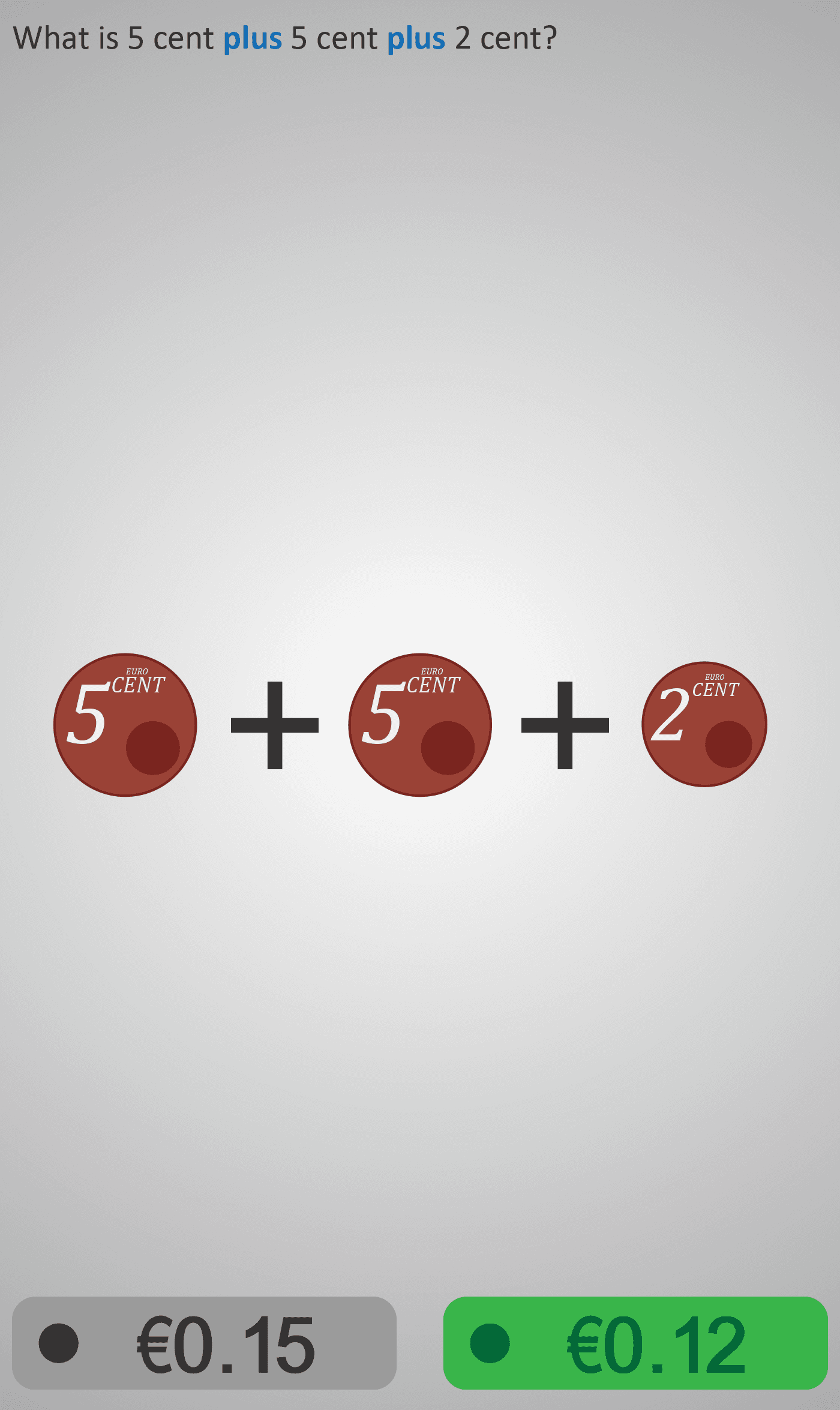
Introduces learners to adding together euro and cent values using visual coin representations. Students are presented with different combinations of coins (5c, 10c, 20c, €1, etc.) and must calculate the total amount. Each screen reinforces the link between coin values and addition, building both number fluency and familiarity with currency.
The sequence starts with smaller amounts like 5c + 5c + 2c, then progresses to mixed amounts with euros and cents, and finally larger totals with multiple coins. The use of coin images makes the questions more concrete, supporting learners in visualising and counting money step by step. Multiple-choice answers provide scaffolding, encouraging accuracy and confidence when handling real-world money problems.
Focus skills:
- Adding small numbers
- Understanding cents and euros
- Building money awareness
- Developing number fluency
Prerequisite Knowledge Required
- Add 1 – basic addition of small numbers.
- Coins 1 – identifying coin values and euro–cent relationships.
- Numbers 1 – recognising place value in two-digit numbers.
Main Category
Arithmetic / Money
Estimated Completion Time
Approx 6-10 seconds per question. 20 questions total. Total time: 2-4 minute.
Cognitive Load / Step Size
Low to moderate — gradual increase from simple cent-only additions to mixed euro-and-cent problems. Each step builds naturally on the previous one without introducing new symbols or notation.
Language & Literacy Demand
Low — short prompts such as “What is the total value?” with strong visual coin cues. The task relies primarily on number recognition rather than reading comprehension.
Clarity & Design
High — realistic coin images arranged neatly for easy counting. Visual hierarchy (coin size, colour, denomination) supports recognition and mental addition. Multiple-choice answers minimise distraction and focus on core skill-building.
Curriculum Alignment
Aligned with Number – Money in the Irish Mathematics Curriculum:
- Recognise, exchange, and use euro and cent.
- Add and combine values of coins and notes to find totals.
Engagement & Motivation
High — familiar, tangible context that connects directly to real-life use of money. Visual feedback and progression through increasingly varied combinations maintain motivation.
Error Opportunities & Misconceptions
- Confusing cents with euros (e.g., treating €1 as 1c).
- Miscounting repeated coins of the same value.
- Forgetting to convert 100c = €1 in mixed examples.
Transferability / Real-World Anchoring
Very high — directly applicable to shopping, budgeting, and handling cash in everyday settings.
Conceptual vs Procedural Balance
Balanced — develops both the conceptual link between coins and value, and the procedural skill of performing simple additions efficiently.
Learning Objectives Addressed
- Recognise and add euro and cent denominations.
- Calculate total values of mixed coins accurately.
- Develop fluency in mental addition of monetary values.
- Strengthen understanding of euro–cent conversion.
What Your Score Says About You
- Less than 5: You may still be learning to link coin images with their values — review cent and euro denominations.
- Between 6–7: You’re developing fluency but may need to slow down on mixed euro-and-cent problems.
- Between 8–9: Strong progress — you can confidently total most combinations of coins.
- 10/10: Excellent — you can add euro and cent amounts quickly and accurately in real-life situations.