
Numbers 2A
Overview
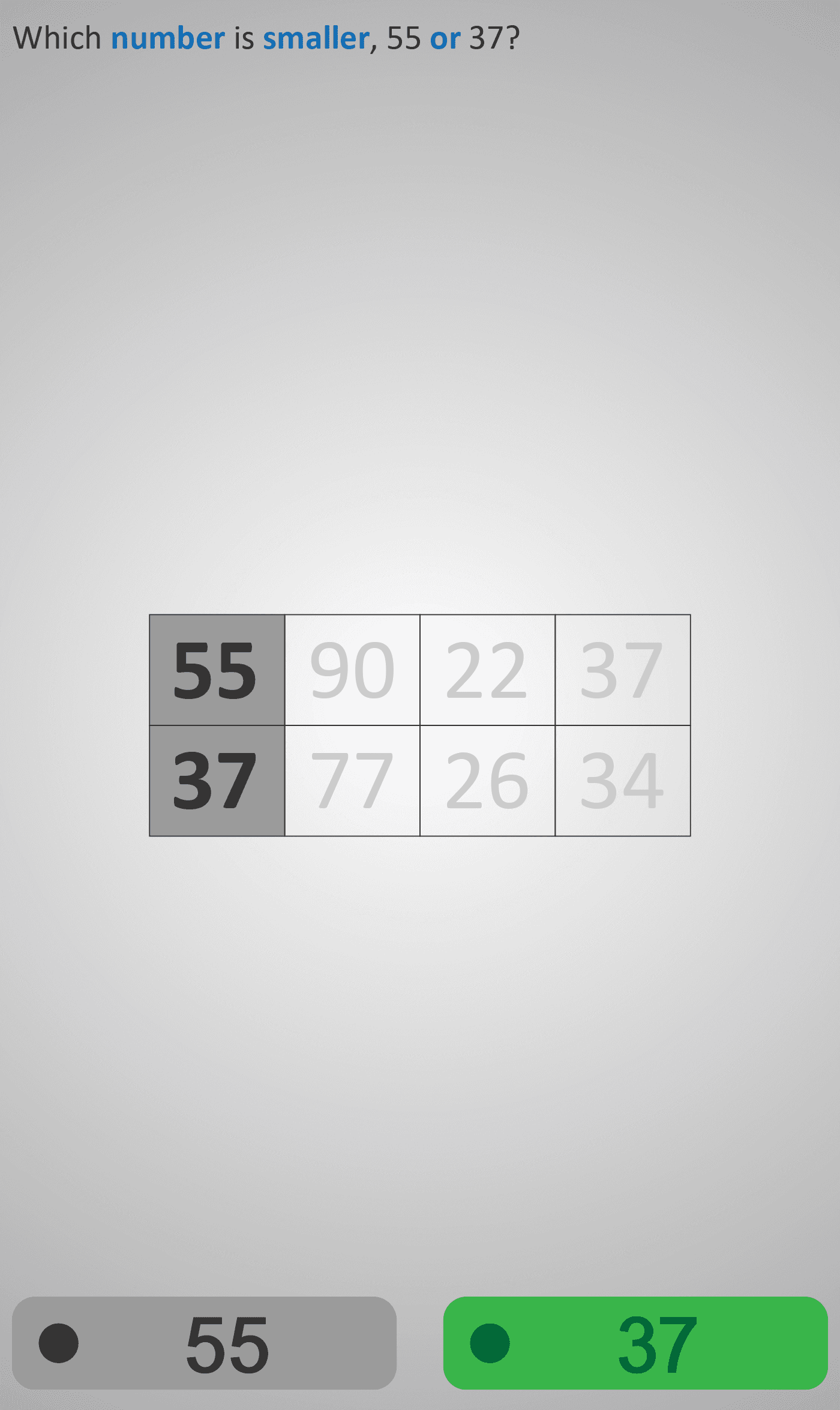
Numbers 2A introduces learners to comparing two numbers and identifying which one is smaller. The exercise presents pairs of numbers within a grid, and the student must select the smaller value from the two given options.
In the first task, students compare 55 and 37, identifying 37 as smaller.
The second task compares 90 and 77, with 77 being the correct answer.
The third task compares 22 and 26, where 22 is smaller.
Finally, the fourth task compares 37 and 34, leading to the correct answer of 34.
The activity uses a combination of bolded number highlights, grid placement, and colour cues to keep the learner engaged while practising number comparison skills. This strengthens number sense and prepares students for further work in ordering and evaluating numerical relationships.
Prerequisite Knowledge Required
- Recognition of two-digit numbers (see Numbers 1).
- Understanding of place value (tens and ones).
- Familiarity with comparing single-digit numbers and using “greater than / less than” ideas.
Main Category
Number / Comparison
Estimated Completion Time
Approx 6-10 seconds per question. 20 questions total. Total time: 2-4 minute.
Cognitive Load / Step Size
Low — each task isolates a simple comparison between two numbers. Gradual variation in magnitude (20s → 90s) supports steady progression without cognitive overload.
Language & Literacy Demand
Minimal — questions are simple (“Which number is smaller?”). The focus is numerical, so even weaker readers can succeed through visual and numerical reasoning.
Clarity & Design
Clean, uncluttered layout with bold numbers and subtle colour highlights. The grid presentation visually separates choices, helping learners focus and respond quickly.
Curriculum Alignment
Irish Junior Cycle Mathematics – Number Strand:
- “Compare and order whole numbers and decimals.”
Engagement & Motivation
High engagement through quick, game-like comparisons. Immediate feedback keeps learners motivated while reinforcing accuracy and confidence in recognising number order.
Error Opportunities & Misconceptions
- Misreading numbers or reversing the comparison (choosing the greater instead of the smaller).
- Overreliance on the left/right position of numbers instead of actual value.
Transferability / Real-World Anchoring
Applicable in everyday reasoning (prices, quantities, distances). Builds foundation for more advanced numerical operations like rounding, estimating, and ordering data.
Conceptual vs Procedural Balance
Conceptual — encourages understanding of place value and relative size, rather than memorised rules.
Learning Objectives Addressed
- Compare two numbers to identify which is smaller.
- Strengthen understanding of place value in two-digit numbers.
- Build accuracy and speed in numerical reasoning.
- Prepare for ordering and sequencing larger sets of numbers.
What Your Score Says About You
- Less than 5: Needs practice distinguishing between larger and smaller numbers.
- 6–7: Understands concept but may mix up when numbers are close together.
- 8–9: Strong grasp of number order with minor slips.
- 10/10: Fully fluent — ready to apply comparison skills to larger and decimal numbers.