
Range 2
Overview
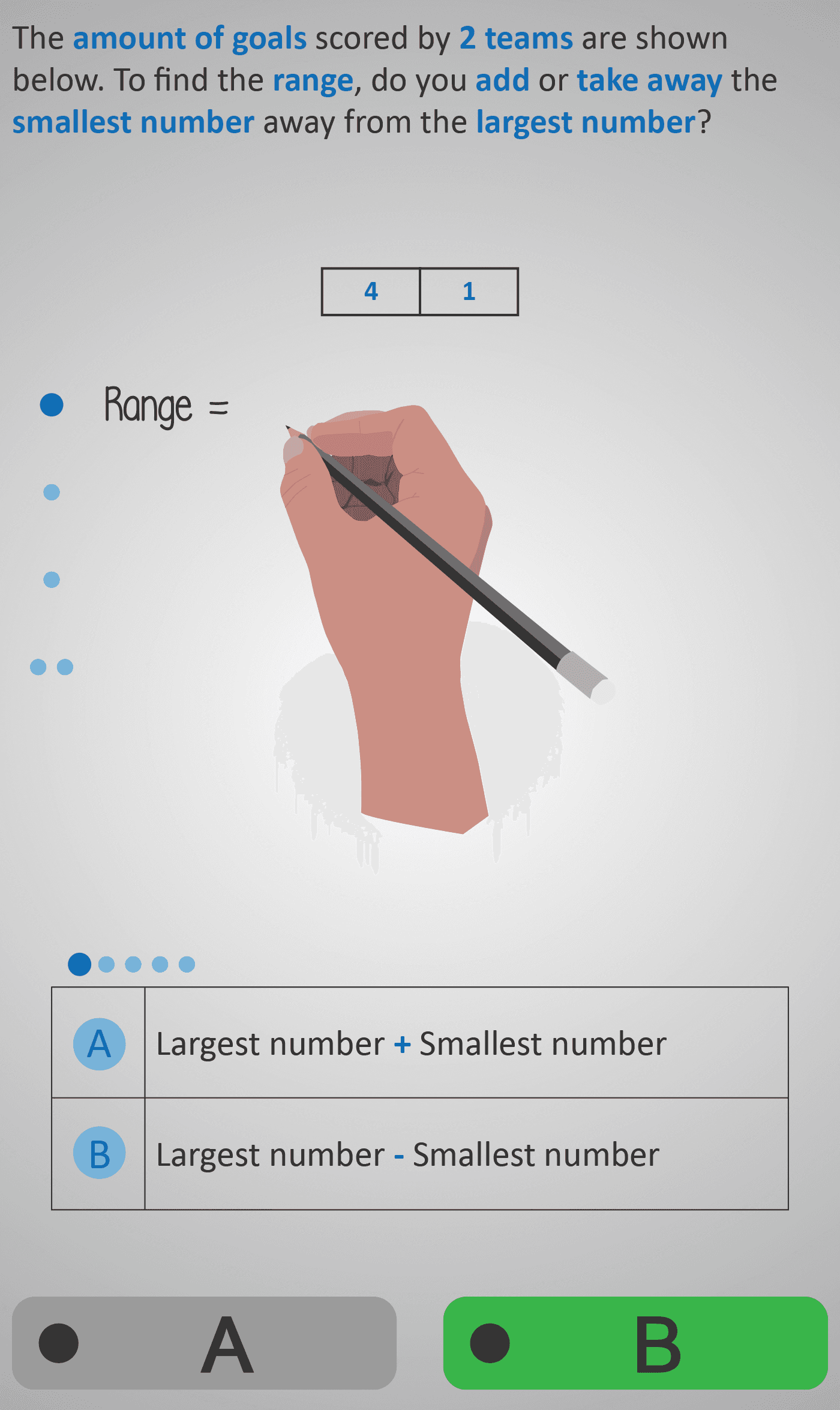
This lesson introduces students to the concept of range in data, using a simple football (soccer) example. Students are shown two teams’ goals (4 and 1) and guided step-by-step to calculate the range.
First, they identify the largest and smallest numbers in the dataset.
They confirm the smallest number is 1 and the largest number is 4.
The rule for finding range is reinforced: Range = Largest number – Smallest number.
Through multiple-choice questions, learners decide whether to subtract or add, and then calculate 4 – 1 = 3 goals.
This sequence helps students practise comparing values, subtracting correctly, and interpreting the meaning of “range” as the difference between the highest and lowest values.
Prerequisite Knowledge Required
- Linked Phlows: Mean 2 – calculating averages from small sets of numbers.
- Median 2 – ordering and identifying middle values in data.
- Subtract 2 – reinforcing subtraction fluency and understanding of differences between numbers.
Main Category
Data & Statistics
Estimated Completion Time
Approx 6–10 seconds per question. 20 questions total. Total time: 2–4 minutes.
Cognitive Load / Step Size
Low — each task introduces one new step at a time: identify → choose operation → calculate. The repetition with small datasets (2–3 numbers) keeps cognitive load light and consolidates the definition of range through consistent structure.
Language & Literacy Demand
Low to Moderate — wording such as “largest,” “smallest,” and “difference” introduces key vocabulary, but visuals (goal icons, number labels) support comprehension. Minimal text reduces reading strain for lower-literacy learners.
Clarity & Design
Clear and supportive — football-themed visuals make the context familiar and concrete. The use of side-by-side comparisons and step indicators (e.g., “largest → smallest → subtract”) visually reinforce the calculation process. Layout avoids clutter, keeping focus on the numerical relationship.
Curriculum Alignment
Irish Curriculum Strand: Data
- Identify the largest and smallest values in a simple dataset.
- Calculate the range as the difference between these values.
- Interpret the meaning of range as a measure of spread in data.
Engagement & Motivation
High — the football theme gives real-world relevance and immediate meaning. The competitive context (“difference in goals”) is relatable and helps learners understand why range matters.
Error Opportunities & Misconceptions
- Reversing subtraction (smallest – largest).
- Confusing “range” with “average.”
- Forgetting to apply subtraction at all (e.g., just stating the largest number).
Built-in step prompts (“subtract or add?”) directly target and correct these errors.
Transferability / Real-World Anchoring
Strong — connects to sports scores, weather data, and test results where variation is meaningful. Students can apply the same reasoning to any situation involving comparison of highs and lows.
Conceptual vs Procedural Balance
Balanced — learners see why the range matters (spread of scores) and how to calculate it procedurally. The football example grounds abstract data skills in concrete reasoning.
Learning Objectives Addressed
- Identify maximum and minimum values in a dataset.
- Apply the rule Range = Largest – Smallest.
- Interpret range as the measure of variation in results.
- Strengthen subtraction fluency through applied reasoning.
What Your Score Says About You
- Less than 5: Needs to review the meaning of range and the subtraction step.
- 6–7: Understands the process but occasionally reverses or skips a step.
- 8–9: Consistently applies the rule and calculates correctly.
- 10 / 10: Excellent mastery — understands both how and why range is used to describe data spread.