
Small → Large 2
Overview
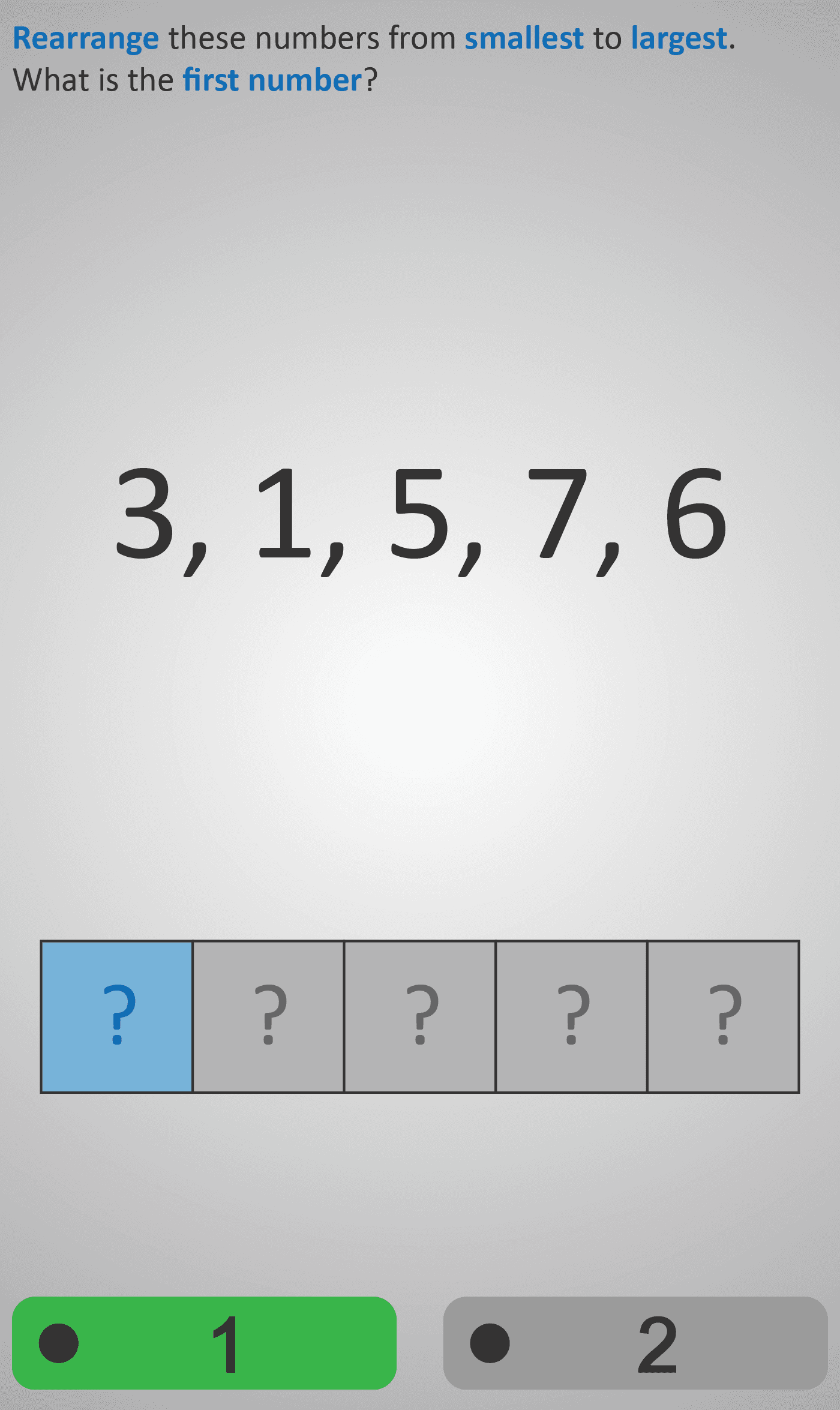
Small → Large 2 helps students practise ordering numbers from smallest to largest. The exercise presents a random set of numbers (e.g., 3, 1, 5, 7, 6) and guides the learner step by step through the ordering process.
In the first screen, students are asked to identify the first (smallest) number, with options to choose from.
Once selected, the next screens ask for the next numbers in the sequence, gradually building the full ordered list.
At each step, students must compare the remaining numbers and decide which one comes next, until the entire sequence is arranged correctly.
This structured, interactive format encourages learners to carefully check relative values and reinforces number sense. Instead of overwhelming them with arranging all numbers at once, the exercise scaffolds the process in stages, ensuring mastery of comparison skills and confidence with sequencing.
Prerequisite Knowledge Required
- Linked Phlows: Numbers 1A – recognising and comparing whole numbers.
- Add 1 – understanding basic counting and number size relationships.
- Numbers 2A – identifying which of two numbers is smaller or larger.
Main Category
Number & Sequencing
Estimated Completion Time
Approx 6–10 seconds per question. 20 questions total. Total time: 2–4 minutes.
Cognitive Load / Step Size
Low to Moderate — each step isolates a single comparison (choosing the next smallest number), which keeps mental load light. The gradual build-up from pairwise comparisons to full ordering strengthens number reasoning without overwhelming working memory.
Language & Literacy Demand
Low — instructions are concise (“Which is smallest?”, “Which comes next?”). Visual layout of numbers in boxes minimises text reliance, supporting learners with weaker reading skills.
Clarity & Design
Excellent — numbers are presented in large, clearly spaced boxes. The progressive reveal of the ordered sequence helps learners visualise progress. Consistent highlighting and colour cues maintain focus and reduce distraction.
Curriculum Alignment
Irish Curriculum Strand: Number – Comparing and Ordering
- Compare and order sets of whole numbers.
- Recognise the position of numbers on a scale or in sequence.
- Develop fluency in comparing numerical values.
- Understand that ordering can be built step by step through comparison.
Engagement & Motivation
Moderate to High — the interactive sequence feels game-like, with each correct step rewarding learners by visibly growing the ordered list. This encourages persistence and focus while reinforcing logical thinking.
Error Opportunities & Misconceptions
- Confusing “smallest to largest” with “largest to smallest.”
- Skipping numbers or repeating values already chosen.
- Misinterpreting the question if all numbers are shown together.
The stepwise progression reduces these risks by presenting only one decision at a time.
Transferability / Real-World Anchoring
Strong — ordering skills underpin everyday reasoning tasks such as ranking scores, comparing prices, or sequencing events. Builds foundational thinking for data handling and statistics.
Conceptual vs Procedural Balance
Balanced — the Phlow builds conceptual understanding of ordering as relational comparison, while also developing procedural fluency through repetition and structure.
Learning Objectives Addressed
- Identify and compare whole numbers accurately.
- Arrange numbers in ascending order through sequential reasoning.
- Develop flexible number sense through repeated practice.
- Strengthen logical and comparative thinking in numeric contexts.
What Your Score Says About You
- Less than 5: Needs more practice comparing numbers accurately.
- 6–7: Understands the ordering process but may make minor sequencing errors.
- 8–9: Consistently orders numbers correctly with good reasoning.
- 10 / 10: Excellent mastery — confidently and quickly orders any set of numbers.