
Electricity Bill 3A
Overview
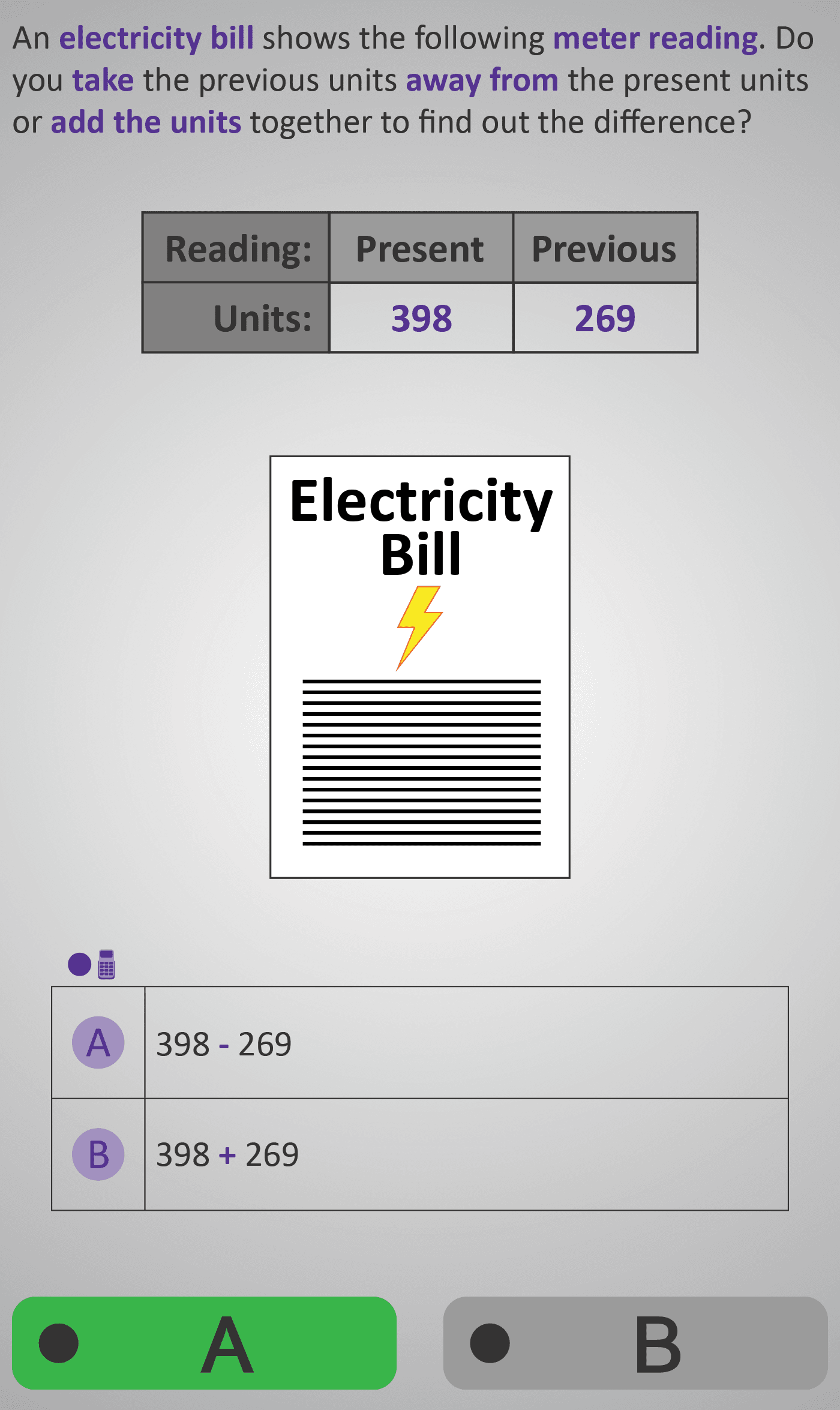
In this real-world Phlow, learners explore how subtraction applies to everyday situations — in this case, calculating electricity consumption from meter readings. The example shows an electricity bill with “Present” and “Previous” readings. Students must decide whether to add or subtract to find the number of units used.
Through clear visual prompts — a lightning bolt bill, calculator display, and side-by-side readings — learners are guided to realise that to find usage, they must subtract the previous reading from the present reading. For example:
398 − 269 = 129
The Phlow progresses through multiple examples (e.g., 398–269, 545–333), encouraging learners to apply this reasoning independently and verify results using their own calculators. The activity builds both numerical fluency and functional numeracy — connecting classroom maths to real-world contexts like reading a bill or managing energy costs.
Prerequisite Knowledge Required
- Subtract 2B – Taking Away with Larger Numbers.
- Calculator Skills 2A – Using the Minus Key.
- Understanding subtraction as finding the difference or “how much more/less.”
- Recognising “present” and “previous” as time-based comparisons.
- Ability to use a calculator for simple subtraction.
Main Category
Applied Arithmetic / Real-World Maths
Estimated Completion Time
Approx. 10–12 seconds per question (25–30 total). Total Time: 4–6 minutes.
Cognitive Load / Step Size
Low to Moderate — each question isolates one decision: add or subtract. The realistic context adds relevance without increasing cognitive load. Repetition strengthens recognition of the subtraction pattern.
Language & Literacy Demand
Moderate — short, everyday language (bill, units, present, previous) helps students connect maths to real-world meaning. Visual supports reduce reading barriers while reinforcing key vocabulary in context.
Clarity & Design
- Data tables highlight “Present” and “Previous” readings in purple.
- Lightning bolt icon and calculator visuals add intuitive context.
- Minimal layout maintains focus on core operations and results.
- Animated steps show subtraction being applied clearly and sequentially.
Curriculum Alignment
Irish Junior Cycle Mathematics:
- Strand 1 – Number
- Strand 3 – Statistics and Probability (Applications)
- Learning Outcomes:
- Apply subtraction in real-world contexts.
- Interpret data from simple tables.
- Use a calculator to solve applied arithmetic problems.
Engagement & Motivation
High — students immediately recognise the relevance of the example, connecting it to real household scenarios. Visual feedback, authentic context, and calculator integration make learning practical, familiar, and motivating.
Error Opportunities & Misconceptions
- Adding readings instead of subtracting.
- Subtracting in the wrong order (previous − present).
- Misreading digits in the meter table.
- Entering numbers incorrectly on the calculator.
Immediate on-screen correction reinforces correct sequencing and prevents persistence of misconceptions.
Transferability / Real-World Anchoring
Very High — this skill directly translates to real-life applications: reading and understanding utility bills, monitoring energy use, and managing budgets. The same principle applies to gas, water, or mileage meters.
Conceptual vs Procedural Balance
Balanced — students practise the procedure (subtraction and calculator use) while building conceptual understanding of difference and time-based change.
Learning Objectives Addressed
- Decide correctly whether to add or subtract in real-world contexts.
- Calculate electricity units used by subtracting readings.
- Use a calculator accurately for subtraction operations.
- Interpret structured information from simple tables.
What Your Score Says About You
- Less than 5: You may be unsure which operation to use — review what “difference” and “units used” mean.
- 6–7: You understand subtraction but may need more care entering numbers.
- 8–9: Great work — you can calculate and interpret correctly in most cases.
- 10 / 10: Excellent! You can read meter data, choose the correct operation, and use a calculator accurately — a valuable life skill mastered.