

Mastery Model
Phlow Academy adapts to how each student learns, keeping challenge and confidence in balance.
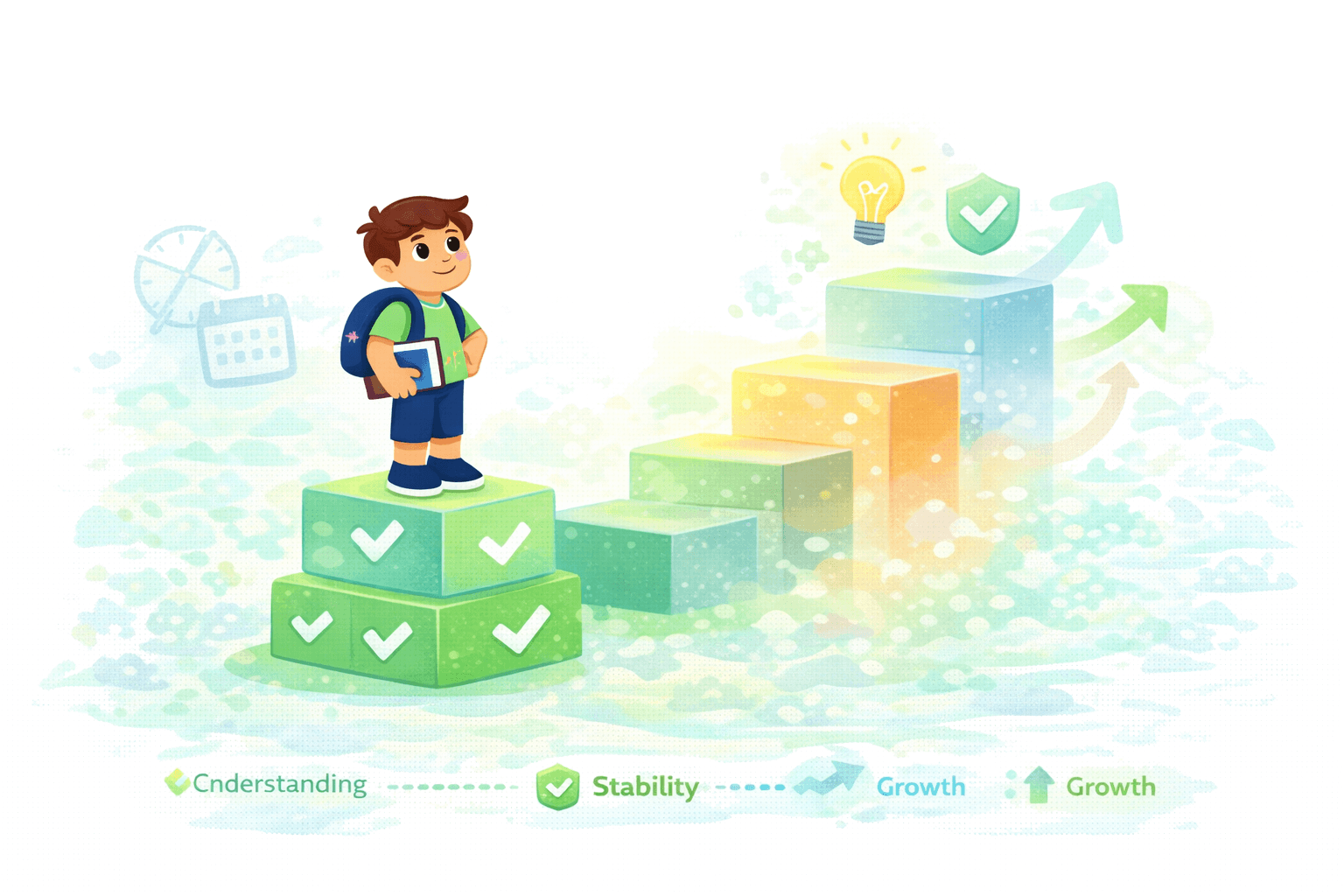
Progress is earned through understanding — not time spent
Progress in Phlow Academy is earned through understanding rather than time spent. The platform uses a mastery-based learning model in which students move forward only when their understanding is secure.
Advancement is driven by demonstrated competence, not by schedules, lessons completed, or time on task. The aim is to build foundations that remain reliable as difficulty increases, so learning continues to stand up under pressure.
Why time-based progression creates hidden gaps
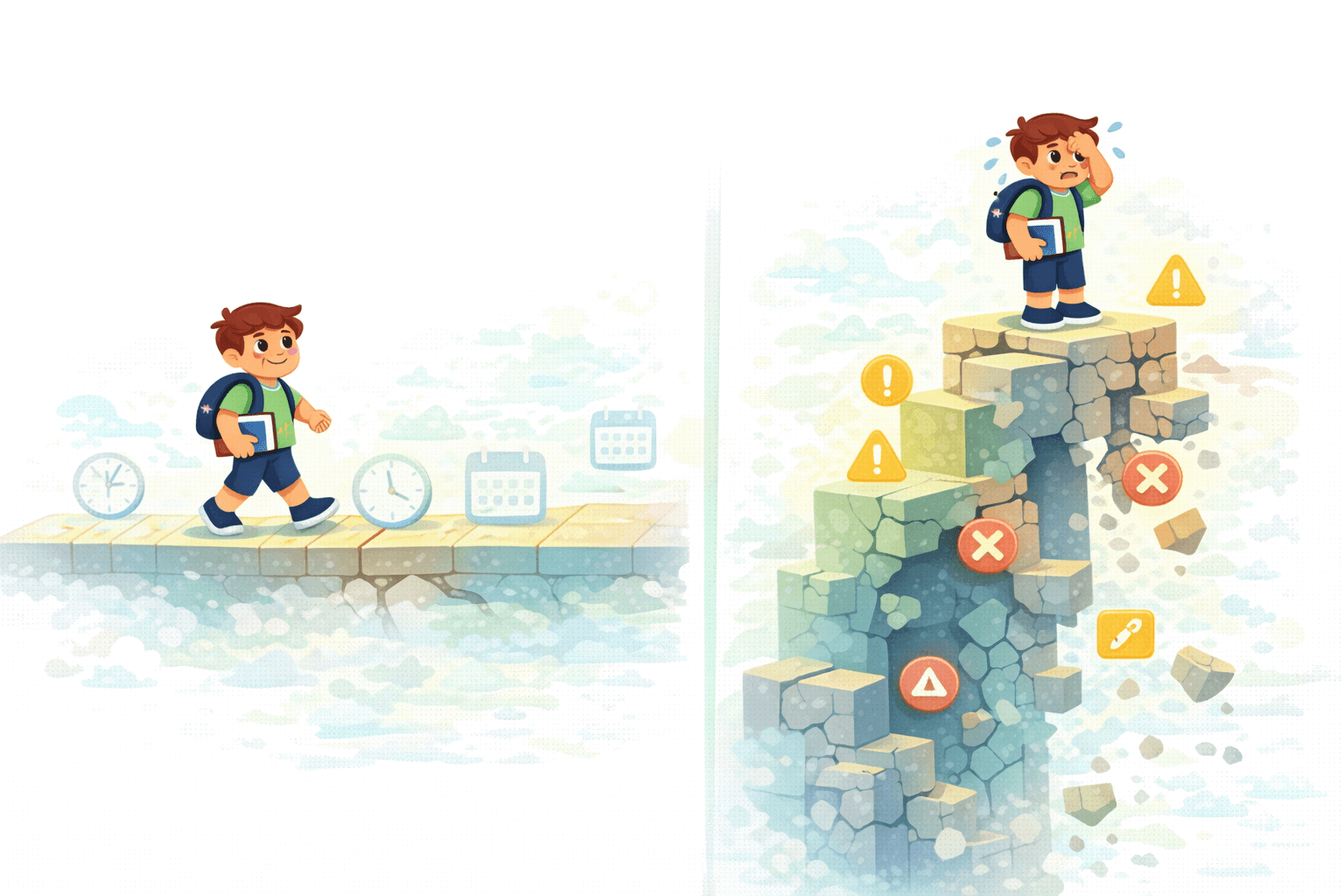
In most education systems, progression is governed by time rather than understanding. Students move on after a lesson, a chapter, or a term regardless of whether learning is complete.
Initially this can resemble progress, but over time small gaps accumulate beneath the surface. These gaps often remain hidden until later topics depend on them, or until exam pressure exposes them.
Phlow is designed specifically to interrupt this pattern by refusing to move learning forward until understanding is secure.

Breadth before acceleration
The current Phlow MVP includes four fully completed levels of mathematics aligned with Junior Cycle Foundation content. These levels are not intended solely for students working at that qualification level.
Instead, they provide broad and finely grained coverage of foundational mathematics. Topics are divided into many small Phlows so understanding can be checked, strengthened, and repaired step by step.
Students at any stage of learning may uncover and address gaps they did not realise they had. In Phlow, breadth comes first, and acceleration comes later.

What mastery means in Phlow
Each topic in Phlow is delivered as a Phlow, which is a structured sequence of questions designed around the decisions a student must make to solve a problem.
Mastery is achieved by completing the full Phlow, demonstrating consistent understanding across its steps, and recovering from mistakes using feedback rather than bypassing them.
Mastery is not defined by speed or perfection. It is defined by the reliability of understanding.
What mastery unlocks
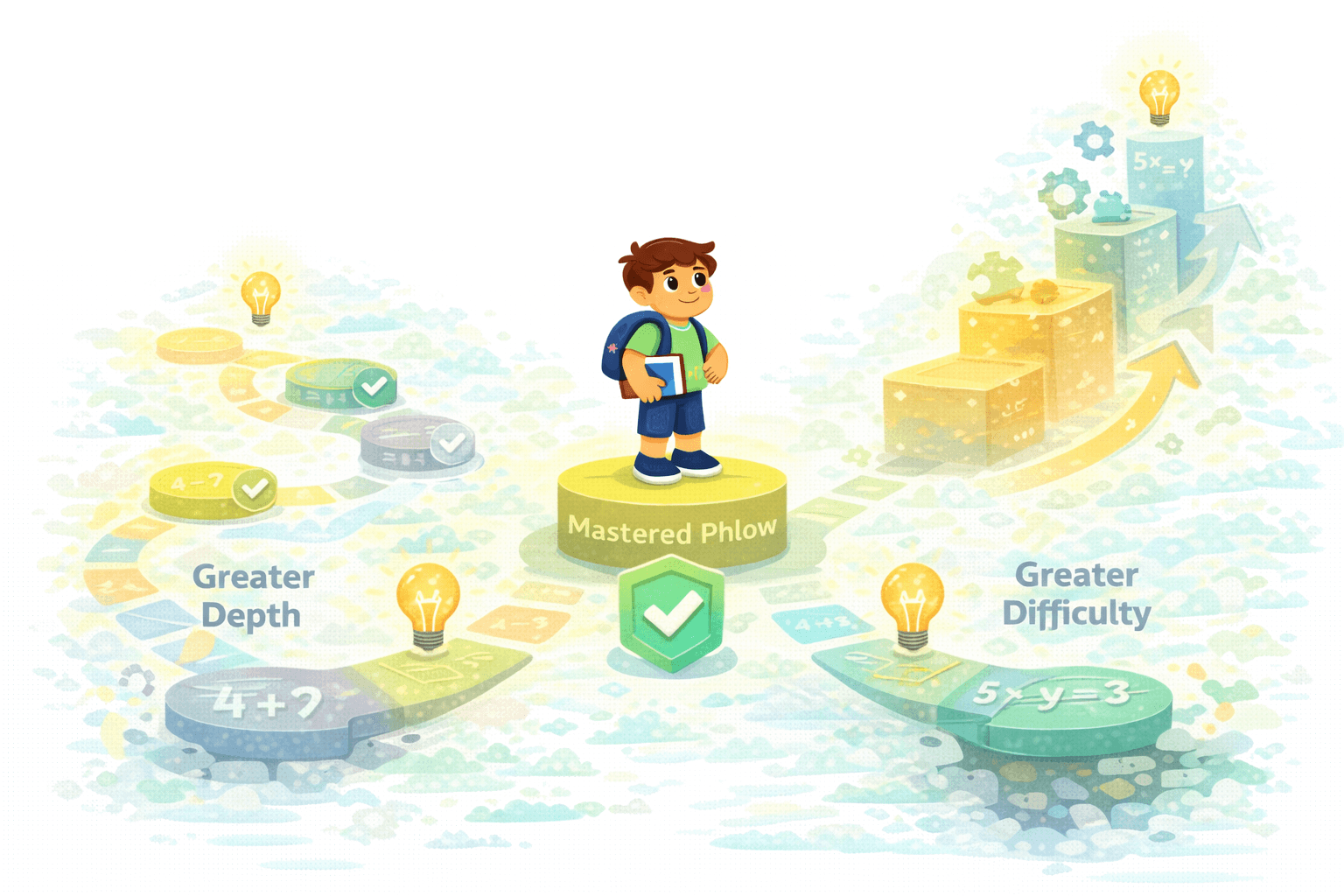
When a Phlow is mastered, progression opens in two directions. New Phlows unlock at higher levels, introducing more decisions and deeper reasoning, while the same Phlow may also unlock again at a higher stage with less support and greater cognitive demand.
Progress therefore reflects learning depth rather than simple exposure to new content.
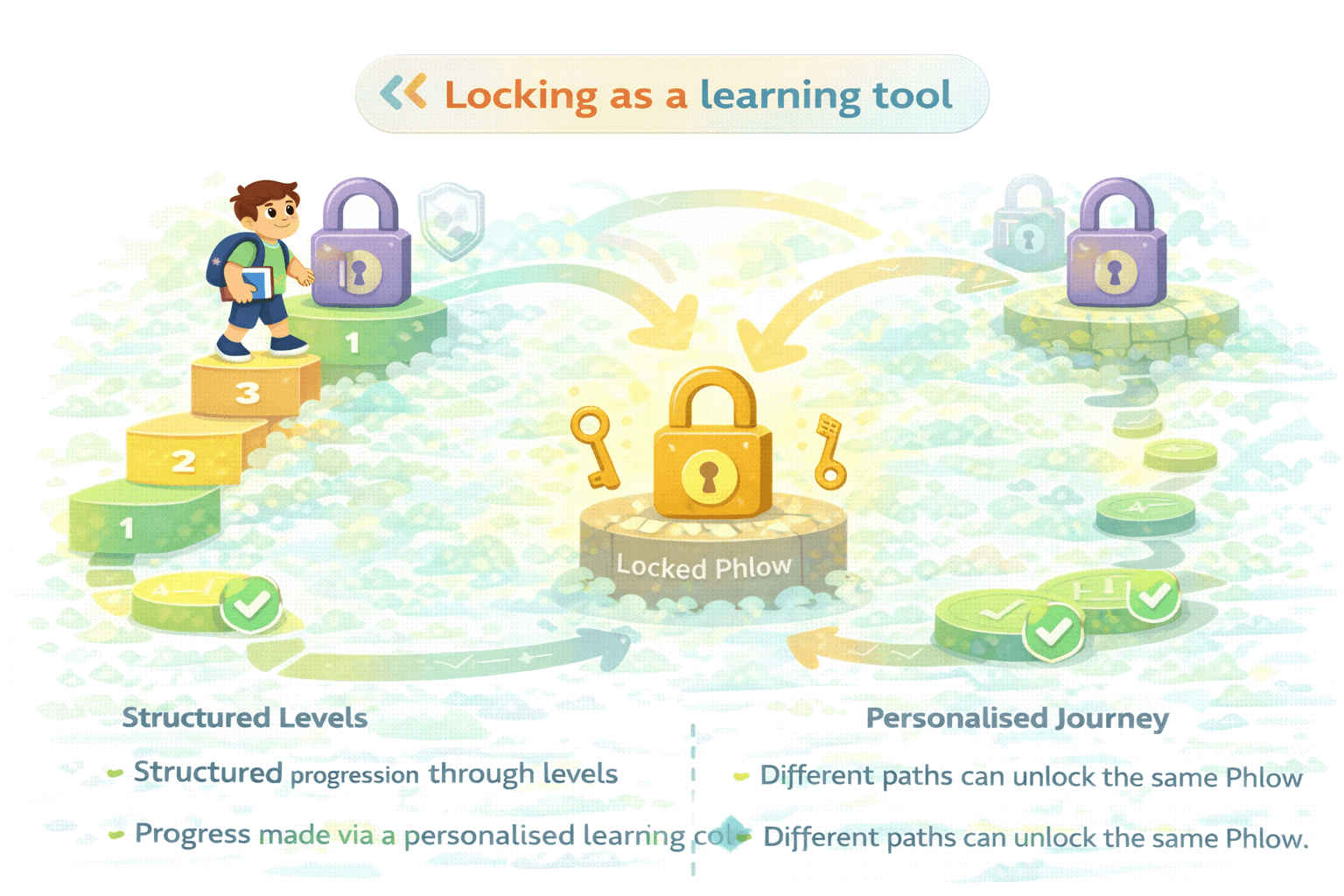
Locking as a learning tool
Some Phlows remain locked until competence has been demonstrated. Locking in Phlow is not punitive, competitive, or artificial, but is instead used to protect learning quality.
Unlocking can occur through structured progression across levels or through progress made within a personalised learning journey. Different paths may unlock the same Phlow, reinforcing that understanding, rather than persistence alone, is what opens doors.
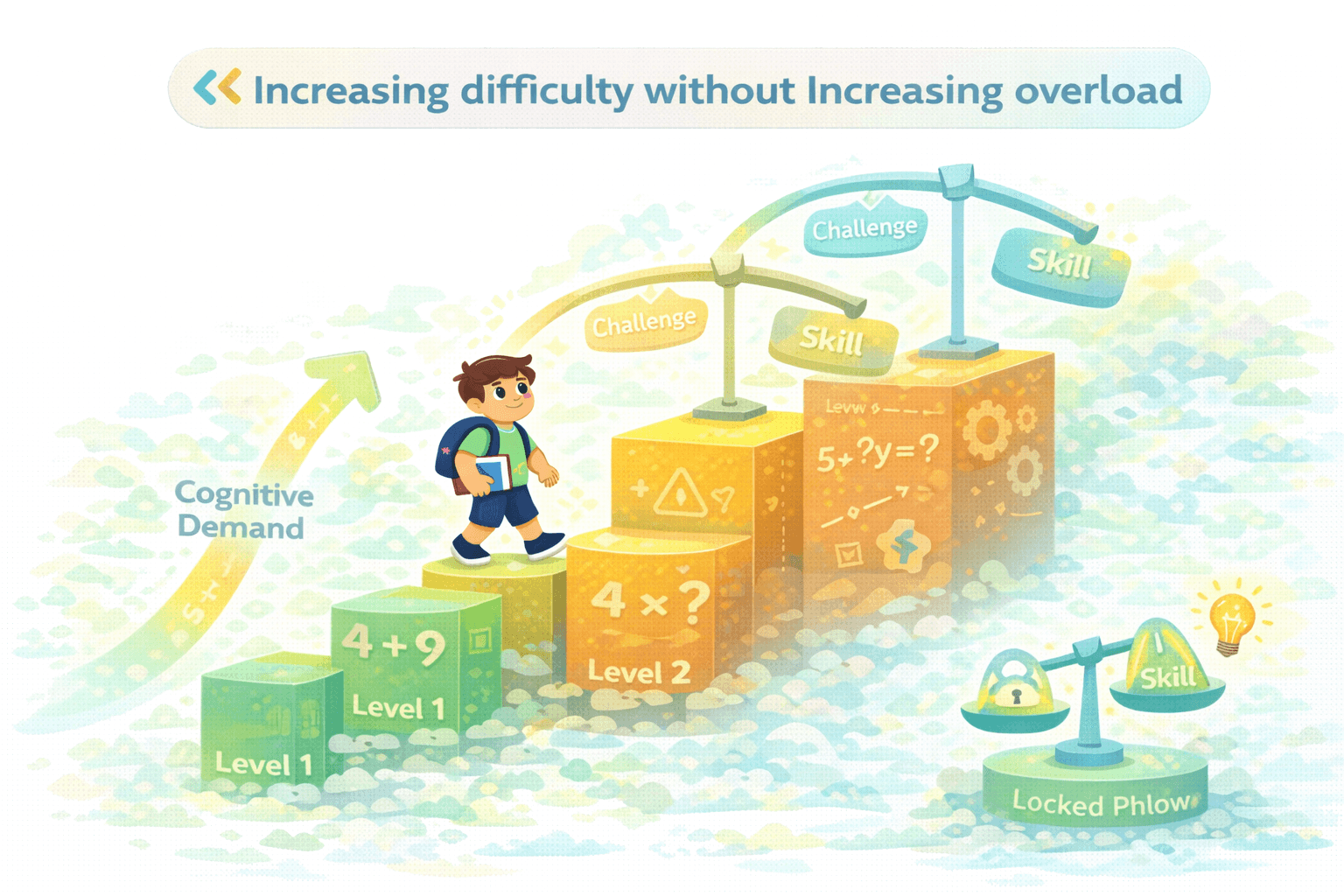
Increasing difficulty without increasing overload
As levels increase, Phlows require more decisions, greater structural complexity, and deeper reasoning. Viewed side by side, higher levels clearly demand more cognitively.
However, learners do not experience this as increasing cognitive load. As understanding grows, so does capacity, and the learner’s position on the challenge–skill balance recalibrates.
Cognitive demand increases across levels, while cognitive load for the learner remains within a productive range. Students are always working at the edge of their current understanding, not beyond it, allowing them to remain in flow at every stage.
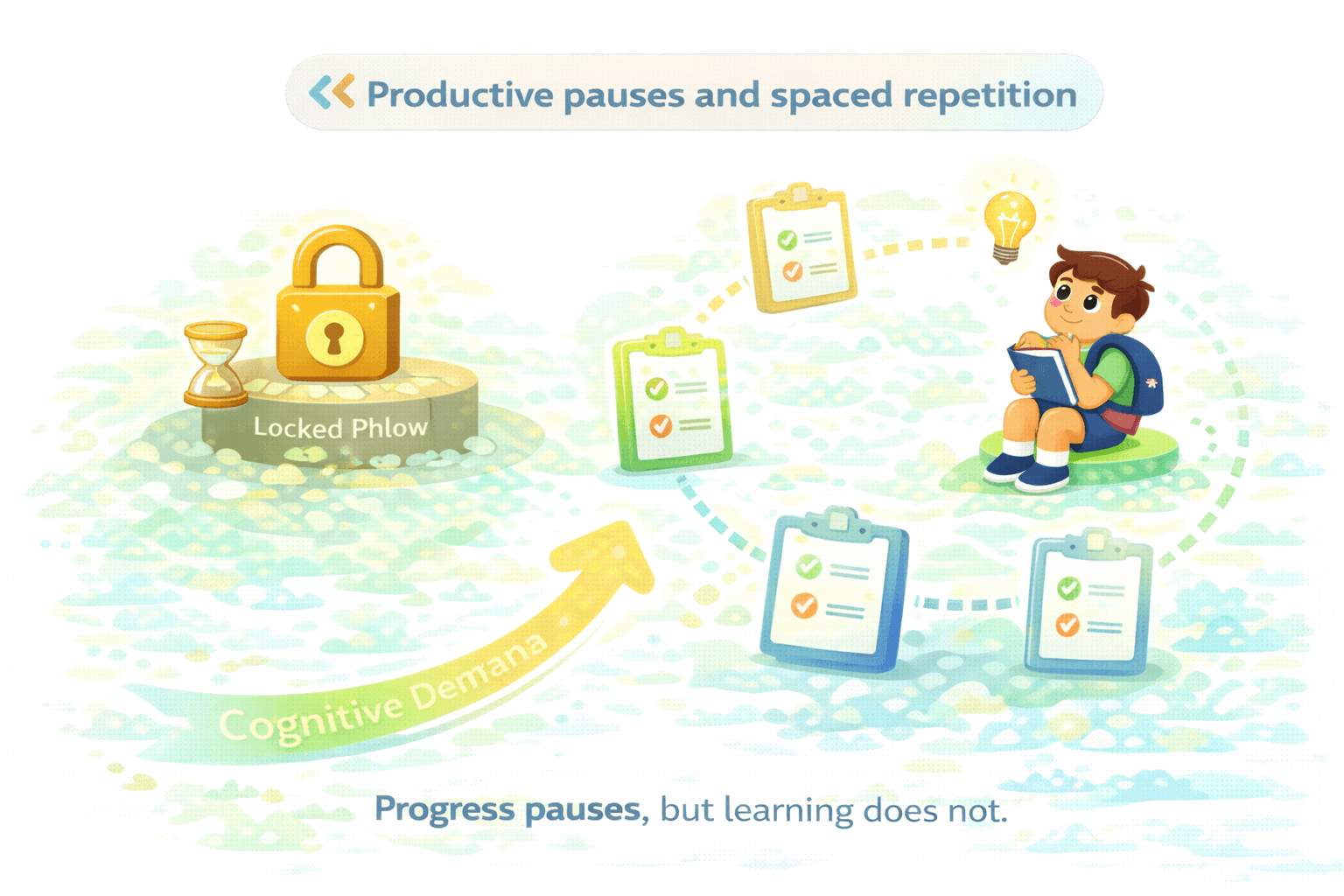
Productive pauses and spaced repetition
Achieving mastery at a higher stage may temporarily lock a Phlow, and this pause is intentional. It supports consolidation and long-term retention rather than short-term memorisation.
During this period, students can continue practising the Phlow at their current stage using multiple question packs that require fresh thinking each time.
Repetition strengthens understanding rather than recall of answers. Progress pauses, but learning does not.
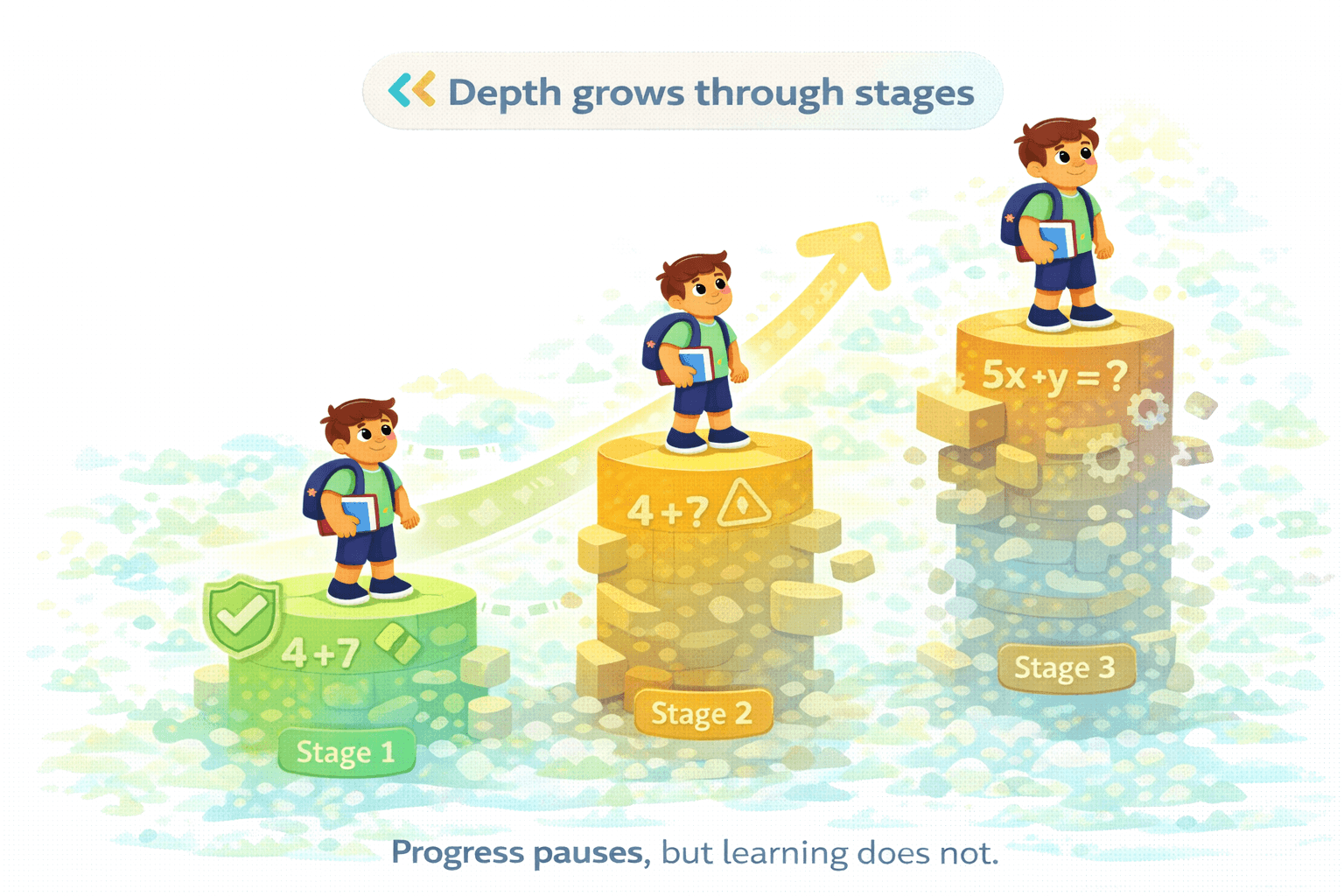
Depth grows through stages
When a student achieves full completion in a Phlow, a higher stage of the same Phlow becomes available.
Each stage removes support and increases cognitive demand so understanding must stand on its own. Mastery therefore deepens through stages rather than being exhausted at first completion.
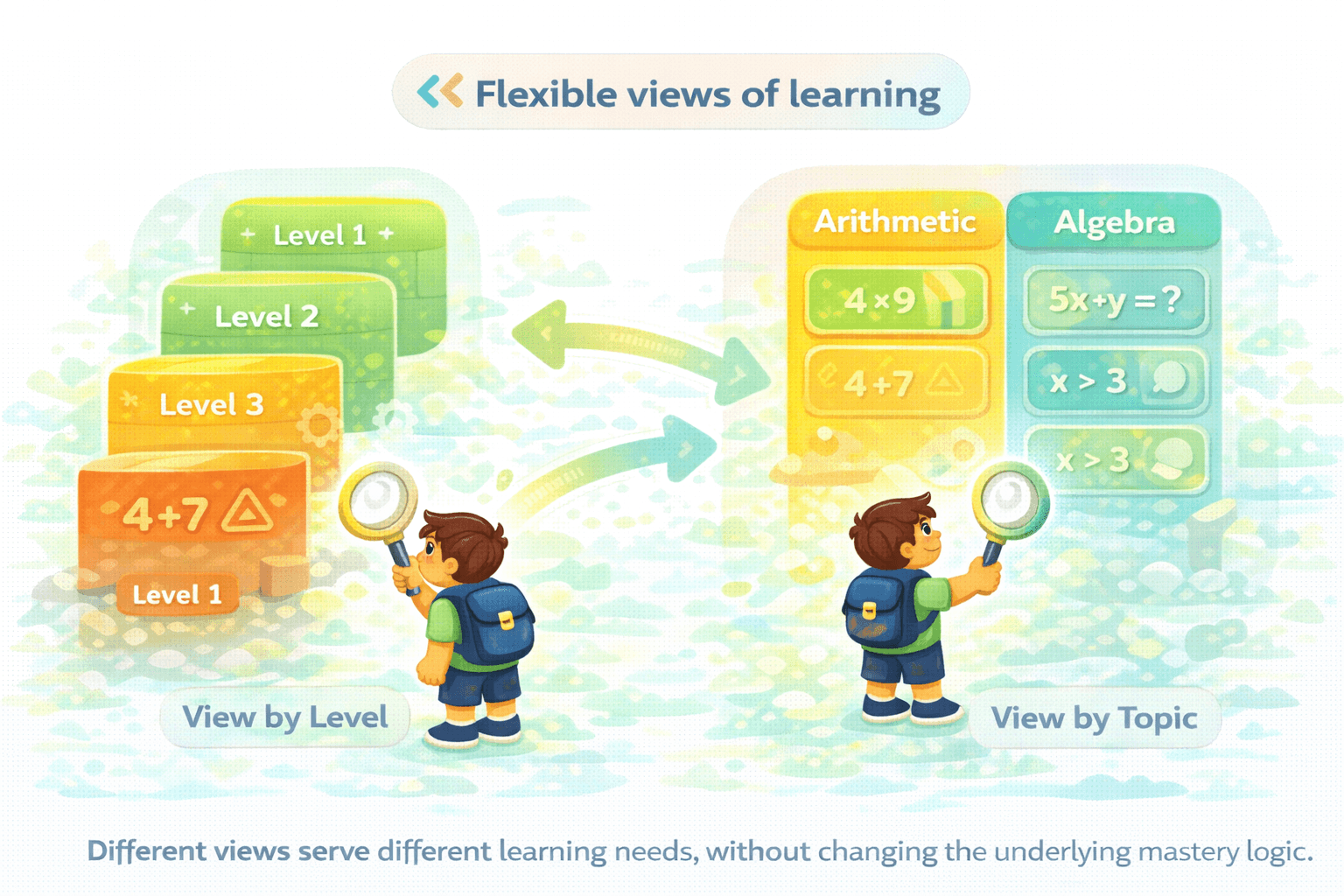
Flexible views of learning
In the MVP, Phlows are primarily viewed by level. Future versions will also allow exploration by topic area, such as Arithmetic or Algebra, showing all related Phlows regardless of difficulty.
This enables students to strengthen specific areas, see how understanding deepens across levels, and choose appropriate challenge points.
Different views serve different learning needs without changing the underlying mastery logic.
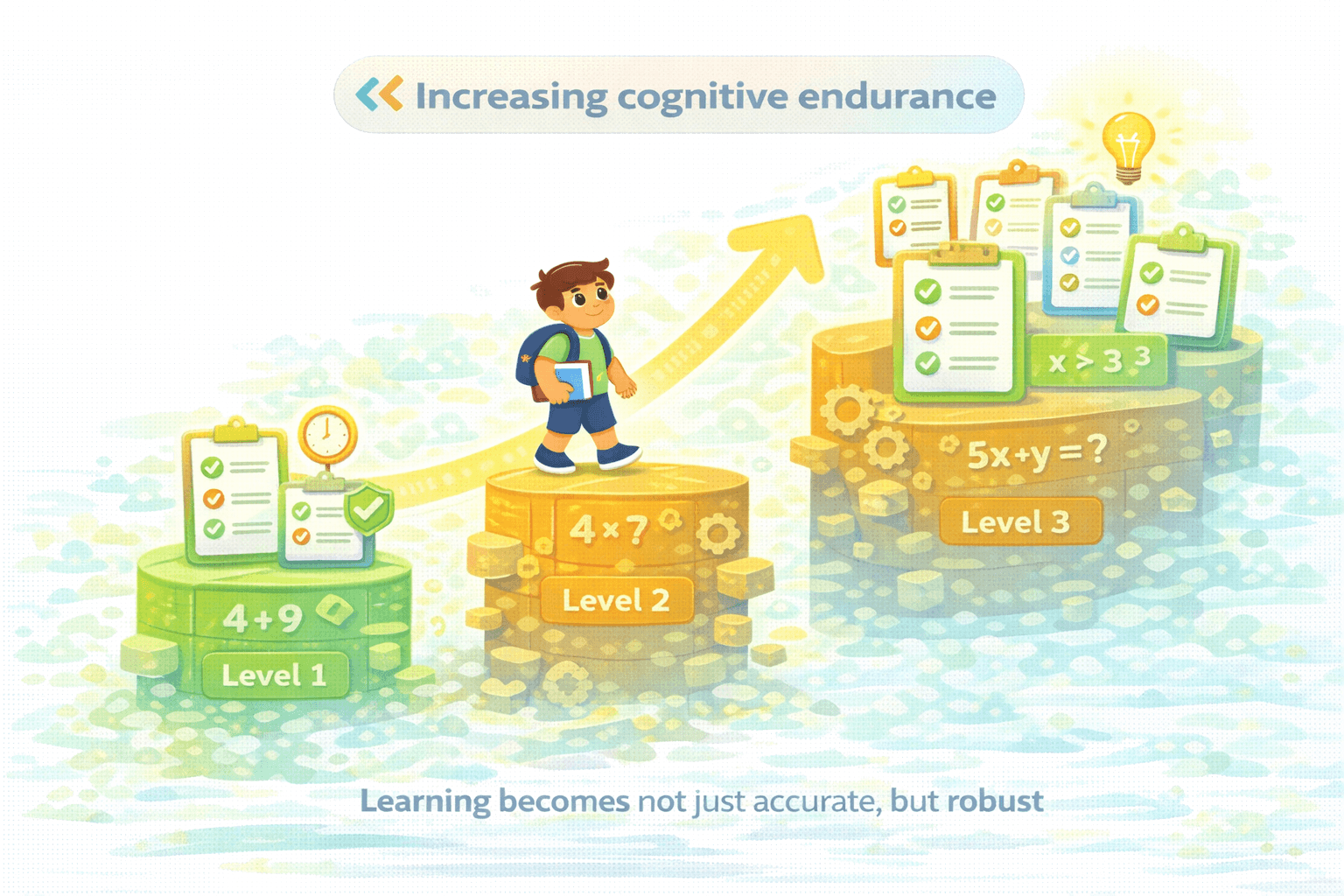
Increasing cognitive endurance
Each level increases the number of decisions a student must make. More questions, greater variety, and deeper reasoning gradually build cognitive endurance alongside conceptual understanding.
Learning becomes not just accurate, but robust.
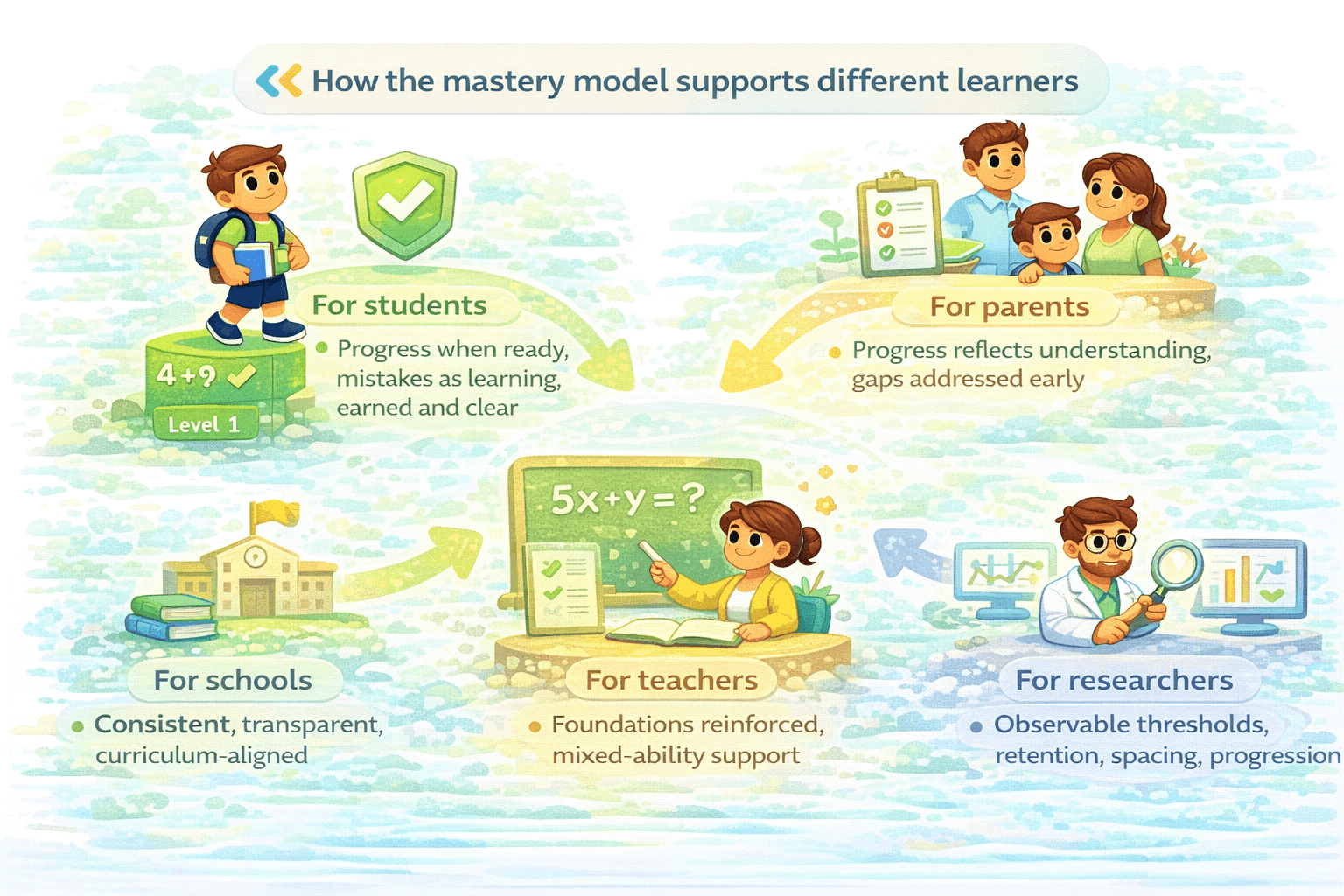
How the mastery model supports different learners
For students: You move forward when you’re ready — not before. Mistakes are part of learning, and progress feels earned and clear.
For parents: Progress reflects real understanding, not rushing. Gaps are addressed early, reducing pressure later.
For teachers: Foundational understanding is reinforced automatically. The model supports mixed-ability classrooms without replacing teacher judgement.
For schools: Progression standards are consistent and inspectable. Learning logic is transparent and curriculum-aligned.
For researchers: Mastery thresholds are observable. The structure supports study of retention, spacing, and progression.
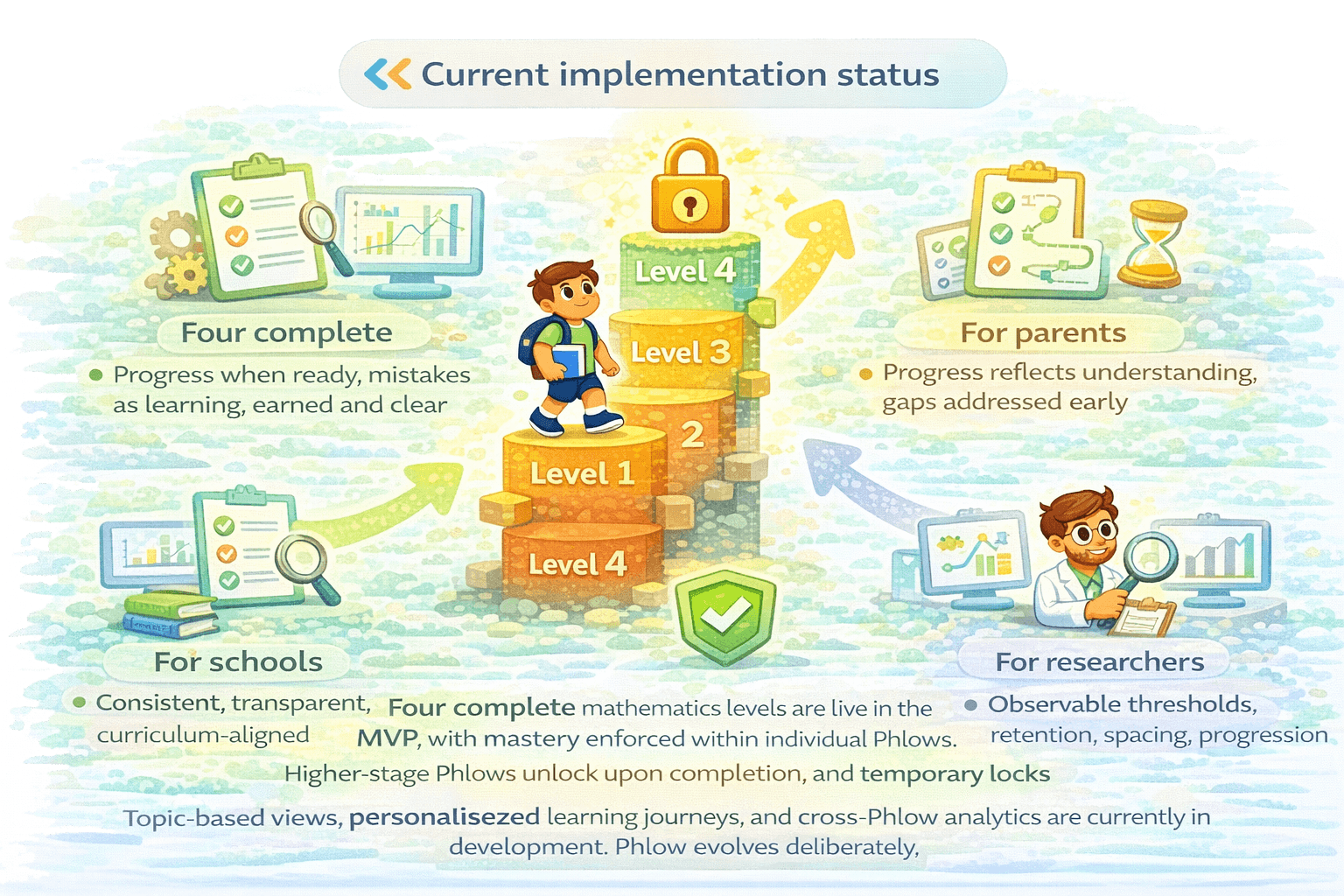
Current implementation status
Four complete mathematics levels live in the MVP, with mastery enforced within individual Phlows. Higher-stage Phlows unlock upon completion, and temporary locks support spaced repetition.
Topic-based views, personalised learning journeys, and cross-Phlow analytics are currently in development. Phlow evolves deliberately, prioritising learning quality over feature speed.