


Past Exam Simulation
Reworking exam questions using the Phlow method, making exam thinking visible and learnable.
Reworking exam questions without lowering standards
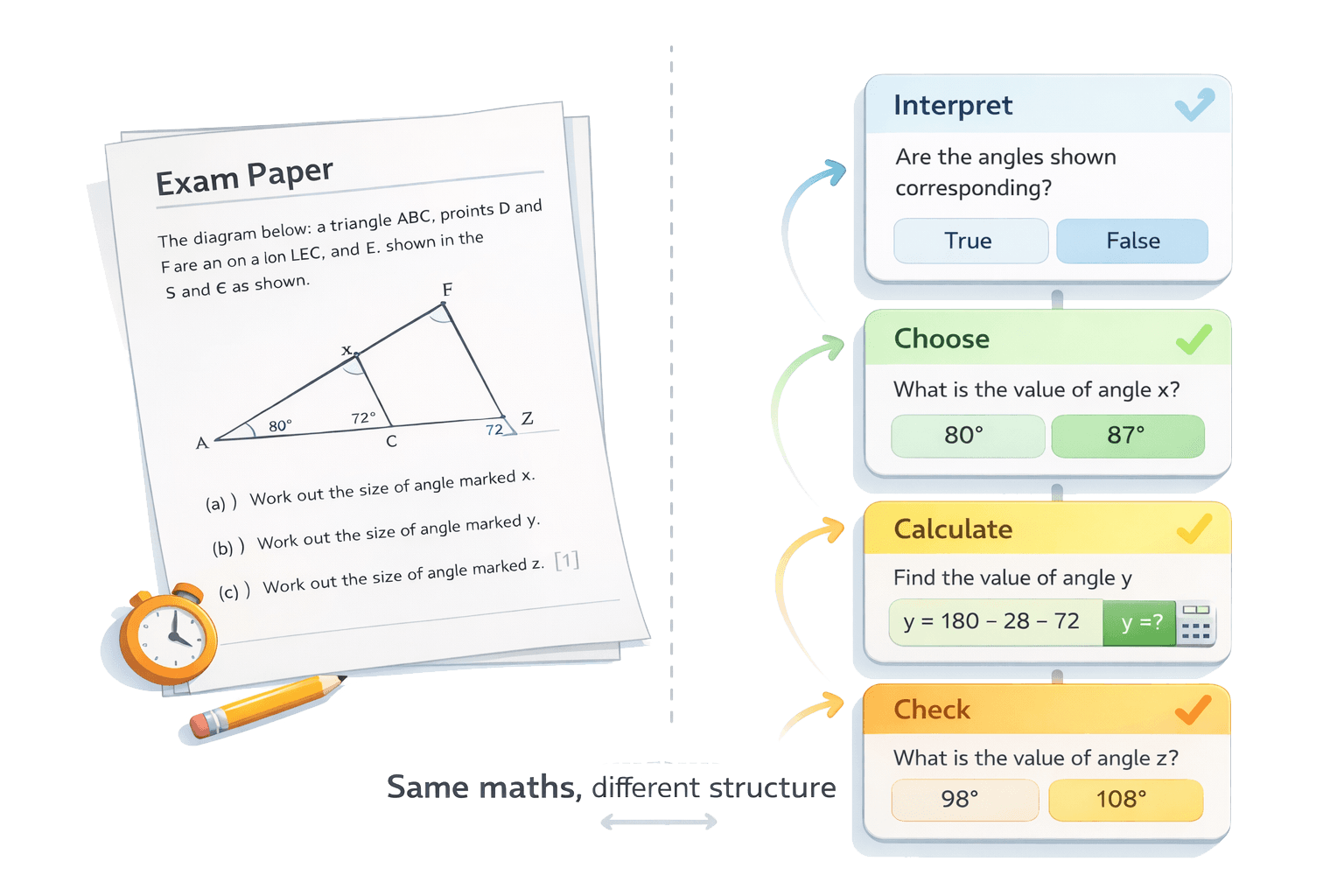
Phlow Academy’s Past Exam Simulations take real Junior and Leaving Certificate exam questions and re-express them using the same Phlow method that underpins all learning across the platform. The mathematics does not change. The structure does.
No more exam papers
Instead of confronting students with an entire exam question at once, each question is decomposed into a sequence of intentional decisions.
These decisions mirror the thinking required in the exam, but make that thinking visible, supported, and learnable.
Exam Levels, Mapped to the Phlow System
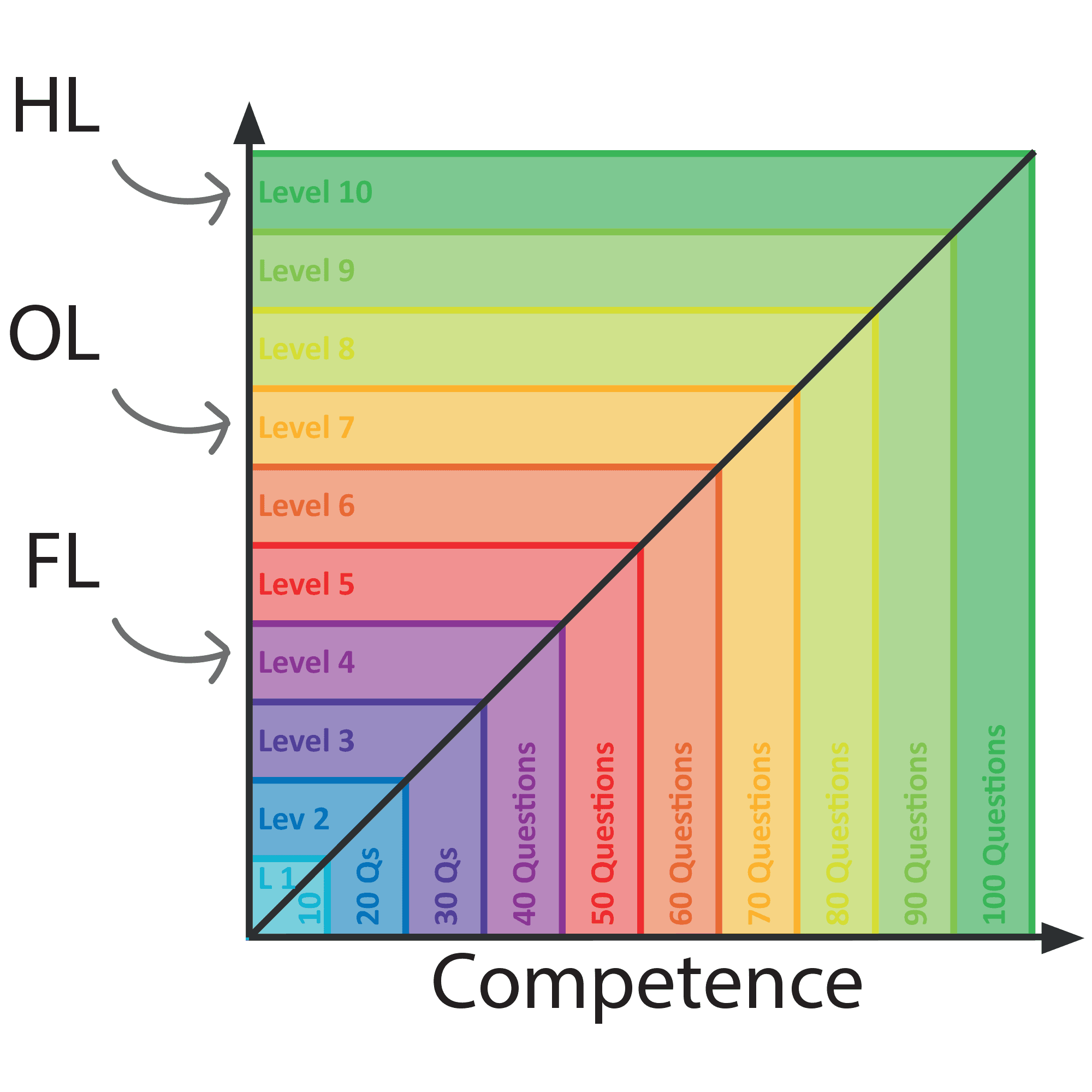
Phlow Academy’s past exam simulations cover Foundation, Ordinary, and Higher Level exams and are deliberately mapped onto the same level framework used across the platform.
Junior Cycle Foundation Level exams align broadly with Phlow Level 4, Ordinary Level with Level 7, and Higher Level with Level 10.
This mapping allows exam preparation to sit naturally within a learner’s existing journey rather than appearing as a sudden change in expectations.
While there is recognised overlap between Higher Level Junior Cycle and Ordinary Level Leaving Certificate content, the same level structure will be used for Leaving Certificate exams to preserve clarity and continuity as students progress.
Traditional exams reimagined
Past Exam Simulation does not aim to make exams easier.
Instead, it makes the thinking required by exams visible and learnable — with the same decision-by-decision structure used across Phlow Academy.
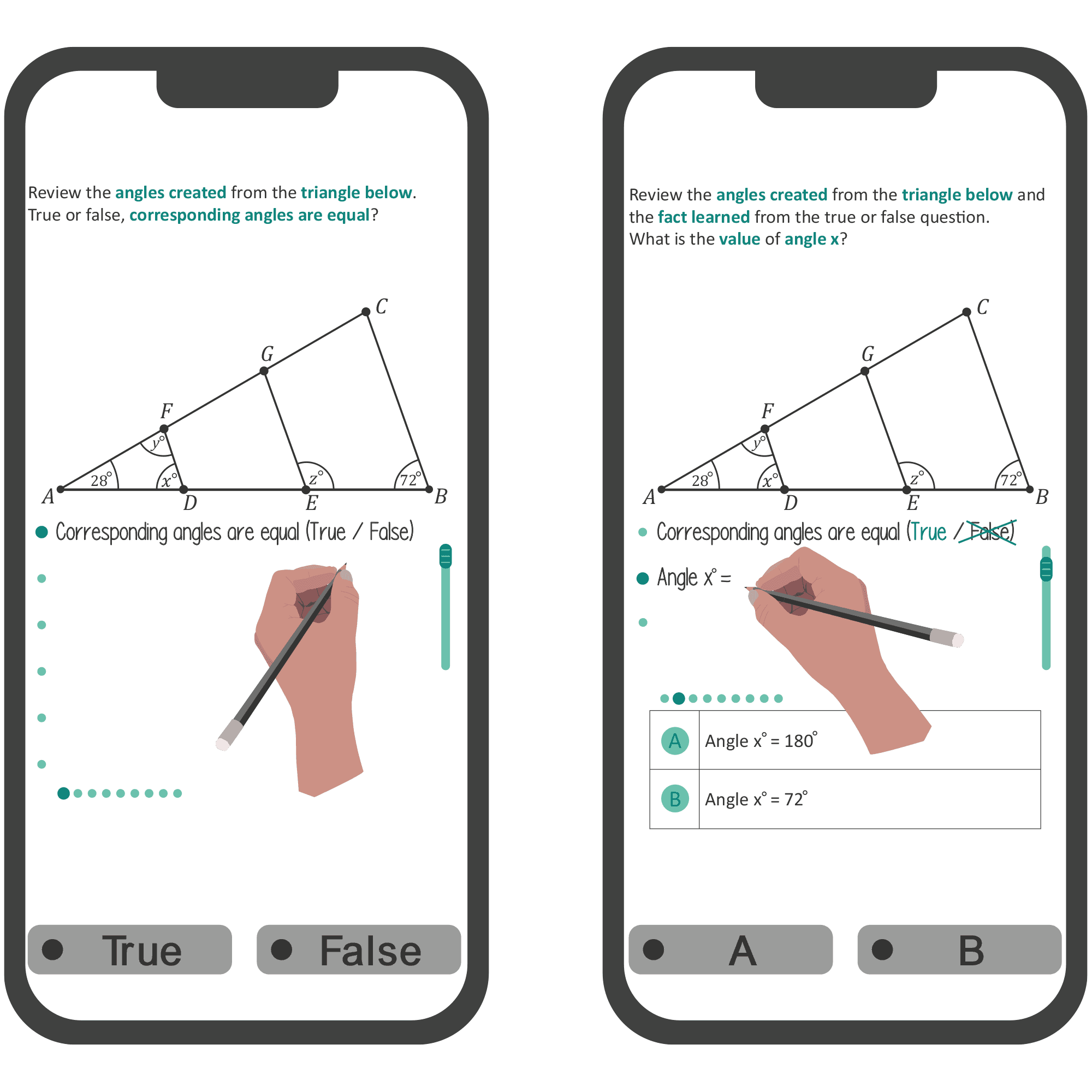
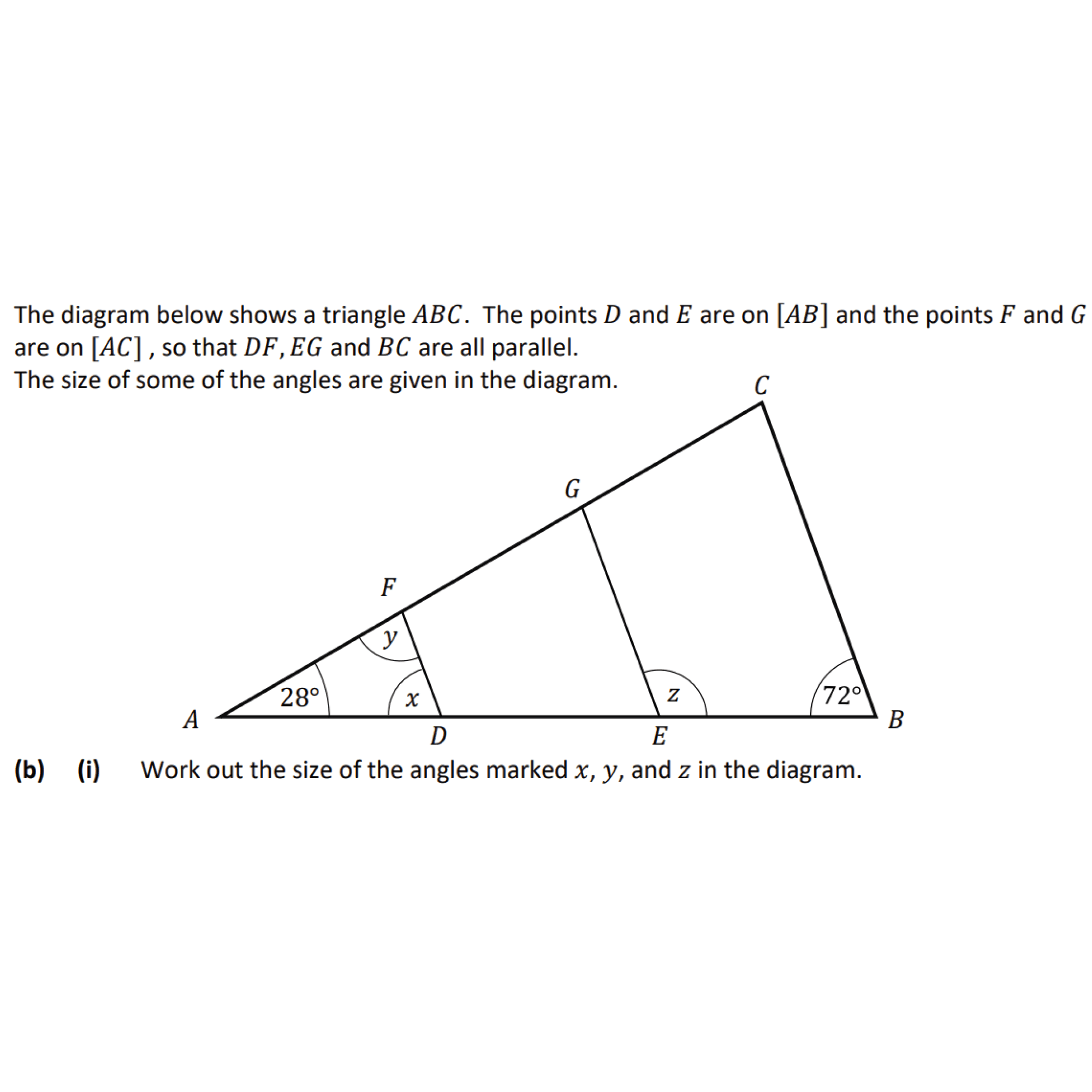
Finding angle x
In the Phlow version, finding x is broken into two focused decisions.
First, the student identifies the relationship created by the parallel lines, recognising that corresponding angles are equal.
This confirms that the angle at D corresponds to the 72° angle at B.
In the second decision, the student applies this relationship directly, selecting the value of x as 72°, reinforcing correct reasoning without solving the entire diagram at once.
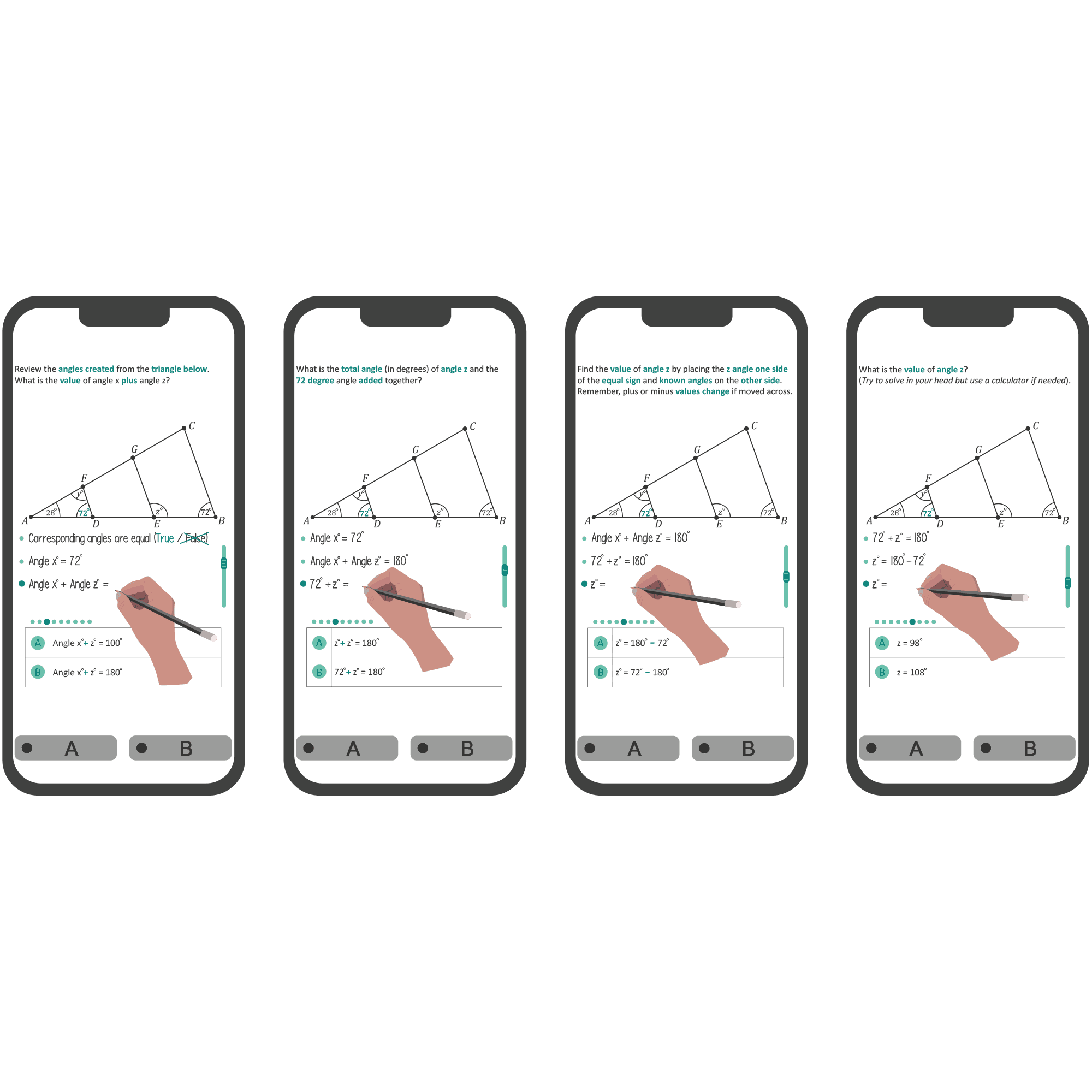
Finding angle z
In the Phlow version, finding z is decomposed into four deliberate decisions.
First, identify the given angle and recognise that the diagram contains parallel lines creating angle relationships..
Next, use parallel line rules to find the corresponding angle that matches the given angle exactly.
A third decision confirms that this angle and z lie on a straight line, so their measures add to 180°.
Finally, subtract the known angle from 180° to calculate the value of z accurately.
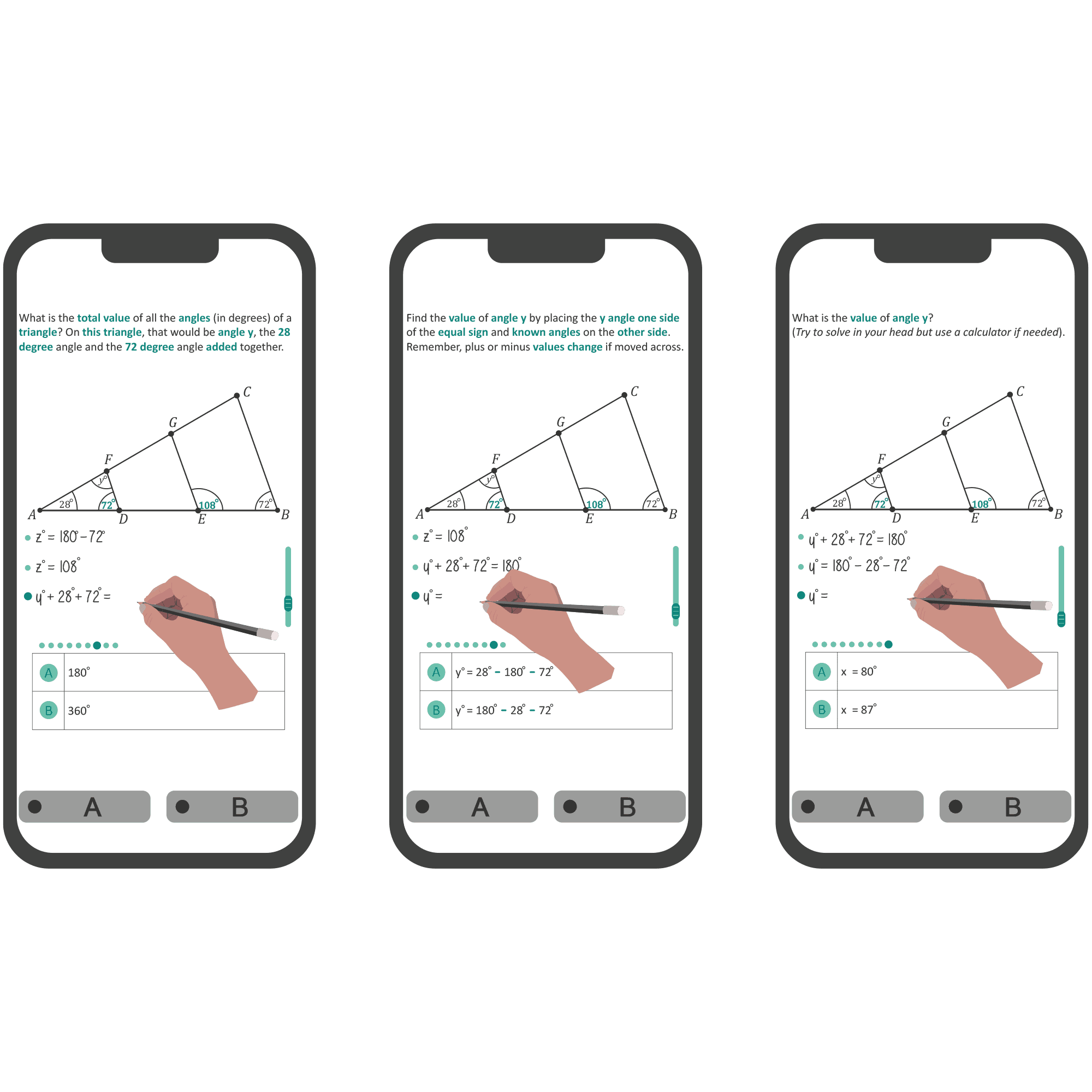
Finding angle y
In the Phlow version, finding y is handled through three focused decisions.
First, recognise that y is the only unknown angle in a triangle and recall that all triangle angles sum to 180°.
Next, rearrange the equation by placing the unknown angle y on one side and all known angle values on the other.
Finally, subtract the known angle values from 180° to calculate the remaining angle y accurately and confidently.
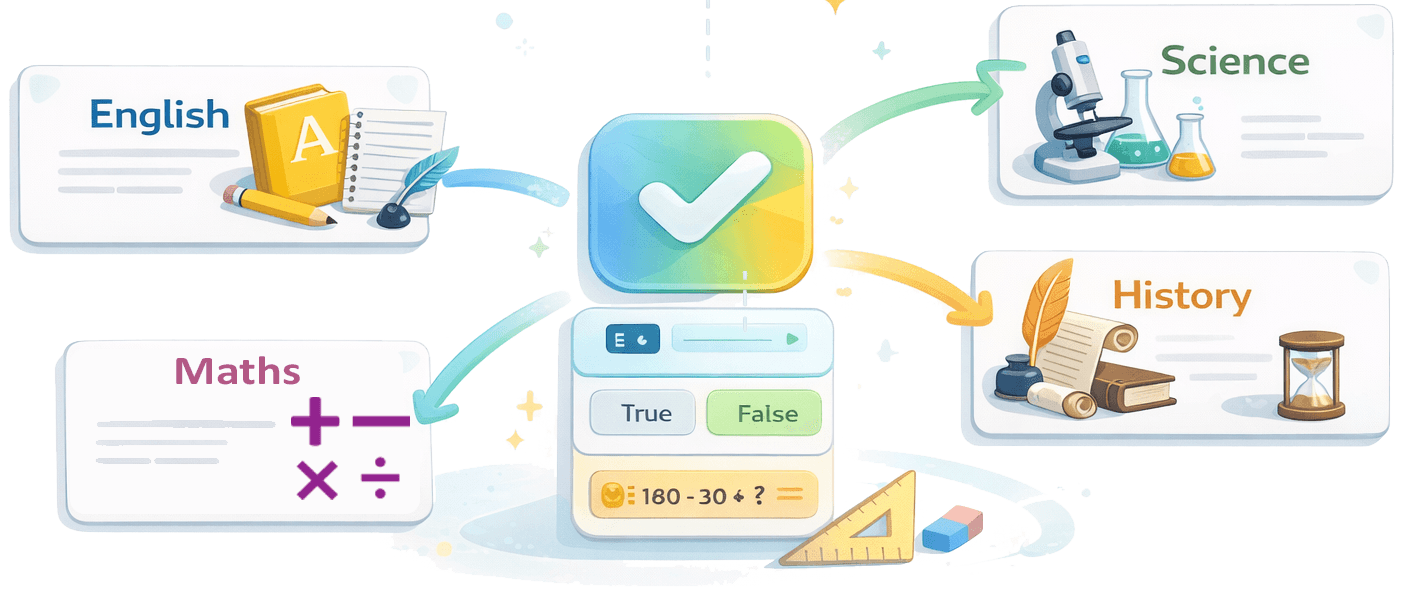
One Method, Applied to All Subjects
Although mathematics is the first subject implemented, the past exam simulation approach is intentionally subject-agnostic.
Any exam subject that involves structured reasoning, interpretation, or multi-step thinking can be expressed using the same Phlow method.
The interaction logic, decision structure, and mastery-based progression remain consistent regardless of subject.
As a result, exam preparation becomes an extension of learning rather than a separate mode, allowing students to apply familiar ways of thinking across all Junior and Leaving Certificate subjects.
Exam-Length Phlows: Long, But Learnable
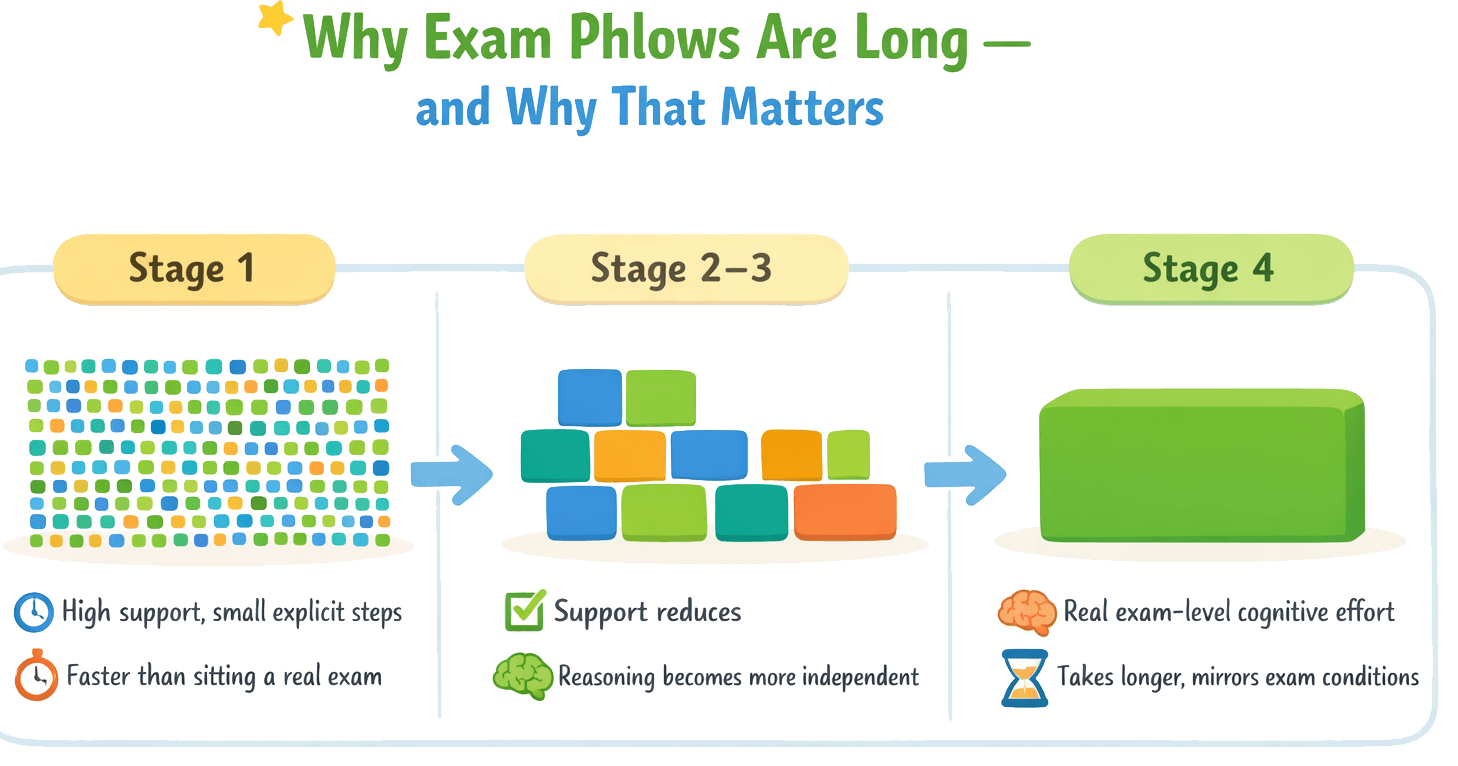
Exam Phlows are deliberately long, reflecting the genuine cognitive demands of a full examination paper.
When expressed at Stage 1, a complete exam may involve several hundred individual decisions.
However, because each decision is small, explicit, and supported, students can typically complete a Stage 1 exam Phlow significantly faster than sitting the equivalent paper under traditional exam conditions.
As support is reduced in higher stages, decisions are consolidated and reasoning becomes more independent, meaning later-stage exam Phlows take longer and more closely resemble real exam effort.
Flexible Completion: Whole Exams or Structured Chunks
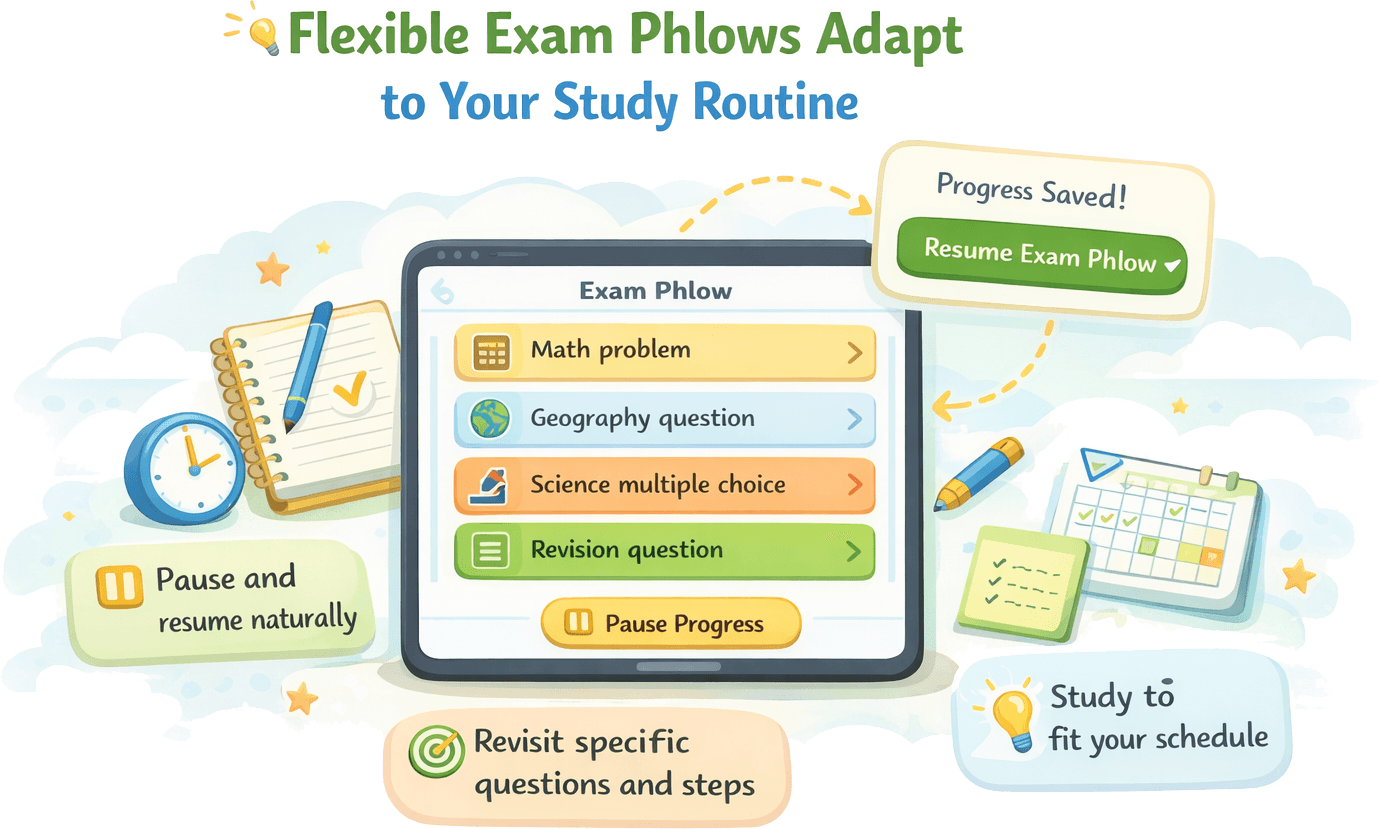
Exam Phlows are not required to be completed in a single sitting.
Students can work through an entire paper in one focused session or complete questions in smaller, coherent chunks without losing context.
Progress can be paused and resumed naturally, and individual questions or decision sequences can be revisited for targeted revision.
This flexibility allows exam preparation to fit realistically into study routines while maintaining a clear sense of structure and progression.
Consistency With the Wider Phlow Ecosystem
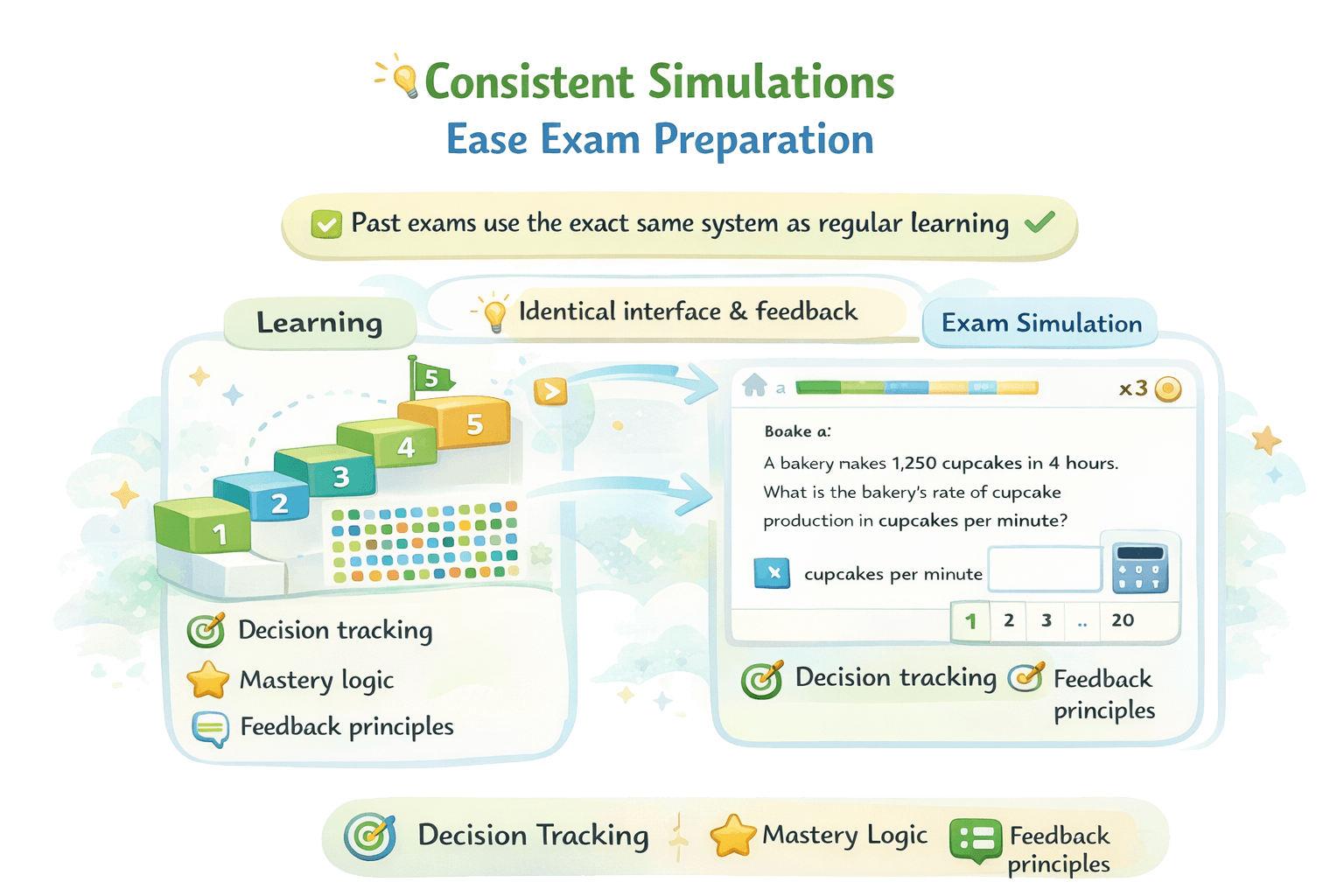
Crucially, past exam simulations do not introduce a new interface or learning mode.
They use the same Phlow structure, decision tracking, mastery logic, and feedback principles as all other content on the platform.
This consistency reduces cognitive friction and anxiety, as students do not need to adapt to a different system when moving from learning to exam preparation.
The only change is the context of the questions, not the way thinking is supported.
Looking Ahead: Exams With Learn AR
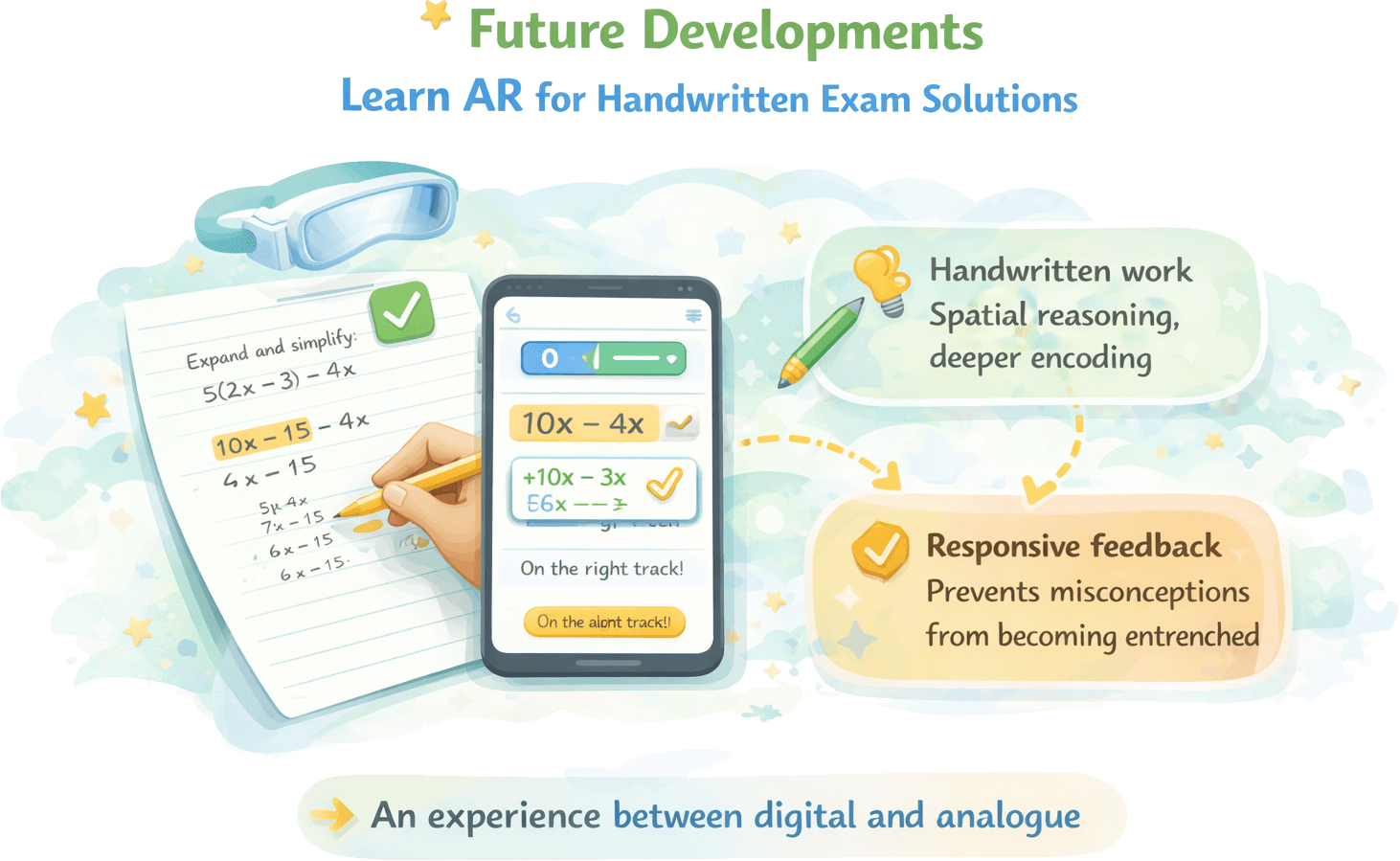
Looking ahead, future developments explore how Learn AR could support exam-style work completed on paper.
Using lightweight augmented reality, students could write full exam solutions by hand while receiving minimal, non-intrusive prompts that help prevent misconceptions from becoming embedded.
This approach aims to combine the cognitive benefits of handwritten work with the responsiveness of adaptive feedback, creating an experience that sits between digital and analogue rather than replacing either.
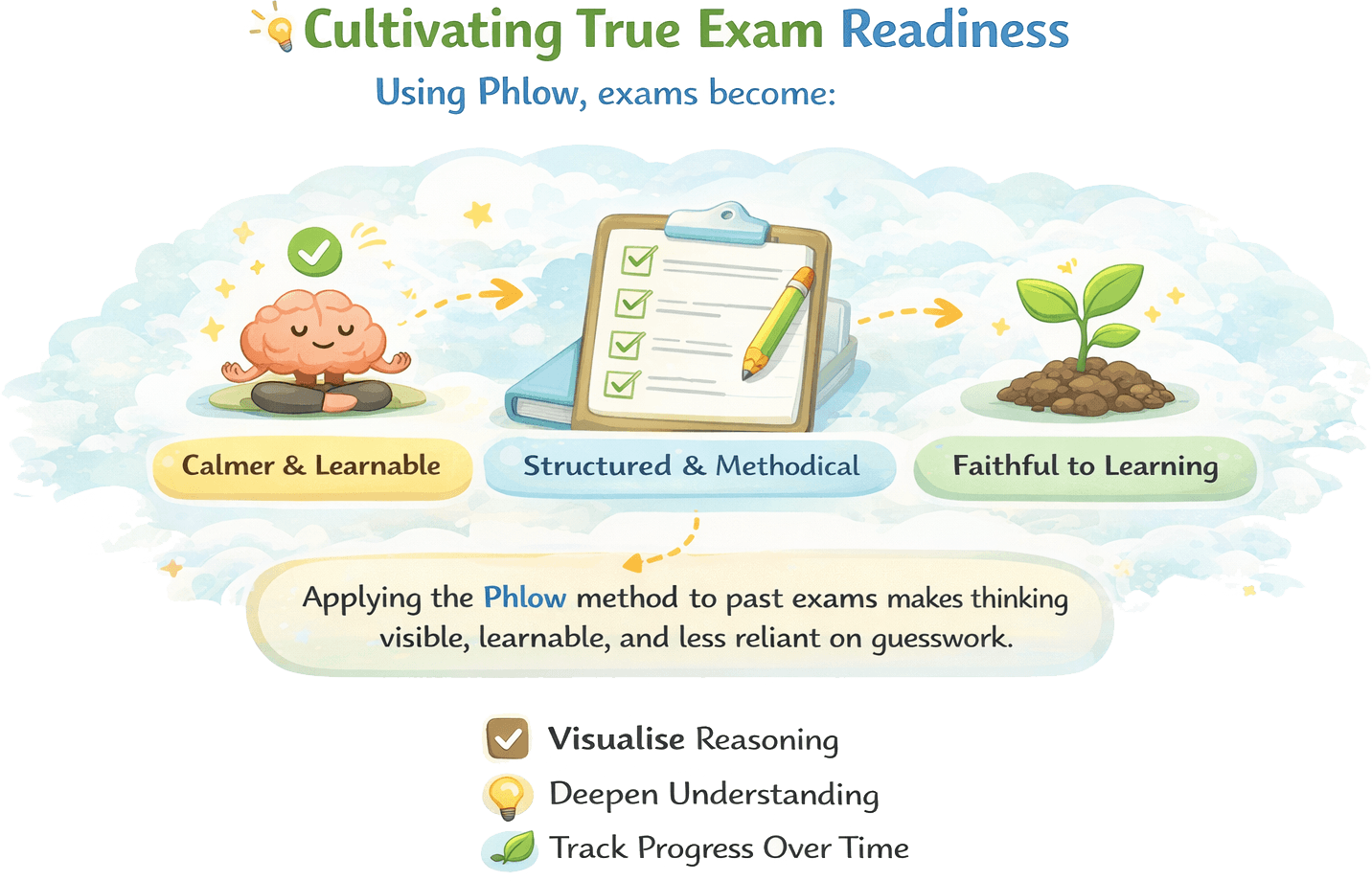
What Past Exam Simulation Changes
Together, these exam simulations do not aim to make exams easier or less demanding.
Instead, they make the thinking required by exams visible, learnable, and less dependent on guesswork or last-minute correction.
By applying the Phlow method to real exam questions, preparation becomes calmer, more structured, and more faithful to how understanding actually develops over time.