

Stages of a Phlow
Support is gradually removed as understanding deepens, building independence before difficulty increases.
The four stages at a glance
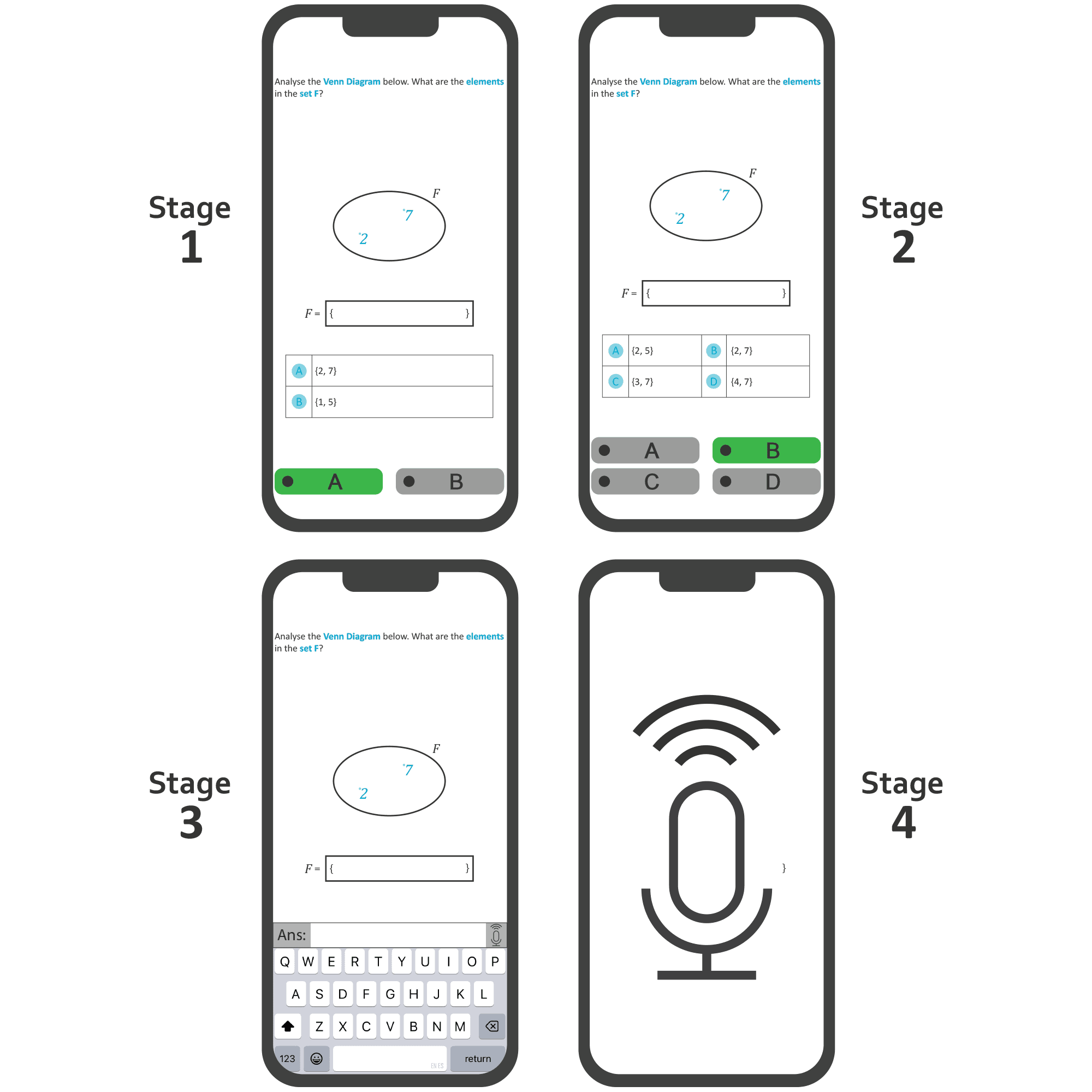
In Phlow Academy, difficulty does not increase only by level. It also increases within a topic, through a structured sequence of stages.
Each stage revisits the same underlying concept, while gradually removing support and increasing independence. The mathematics does not change — what changes is how much help the learner receives.
This ensures confidence is built progressively, not assumed all at once.
How stages relate to mastery
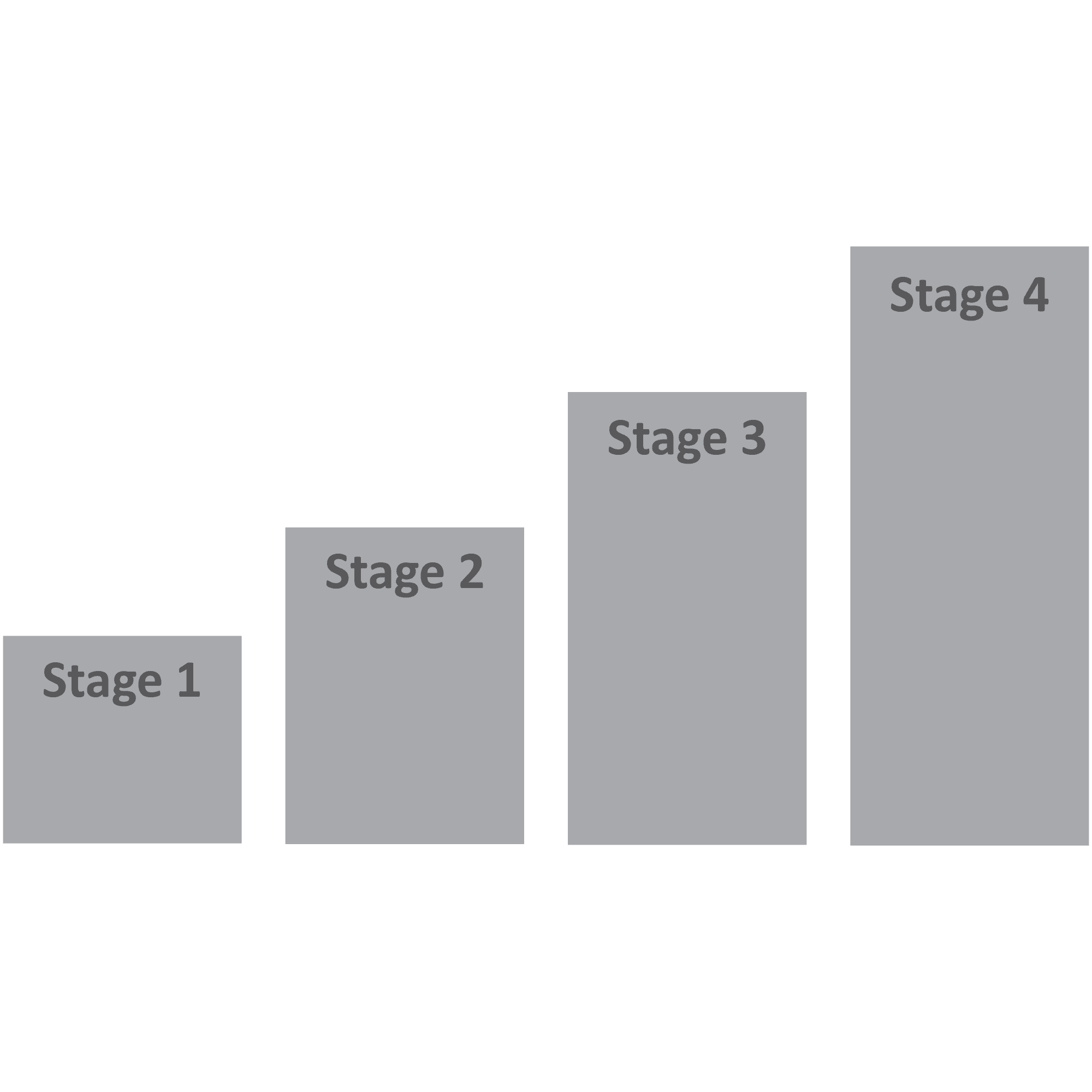
Stages are unlocked through mastery.
When a student completes a Phlow, they do not simply “finish” the topic. Instead, they unlock a new stage of the same Phlow, requiring deeper reasoning and less guidance.
This ensures that progress reflects depth of understanding, not speed.
Support is gradually removed as understanding becomes more secure.
Stage 1 — Supported recognition
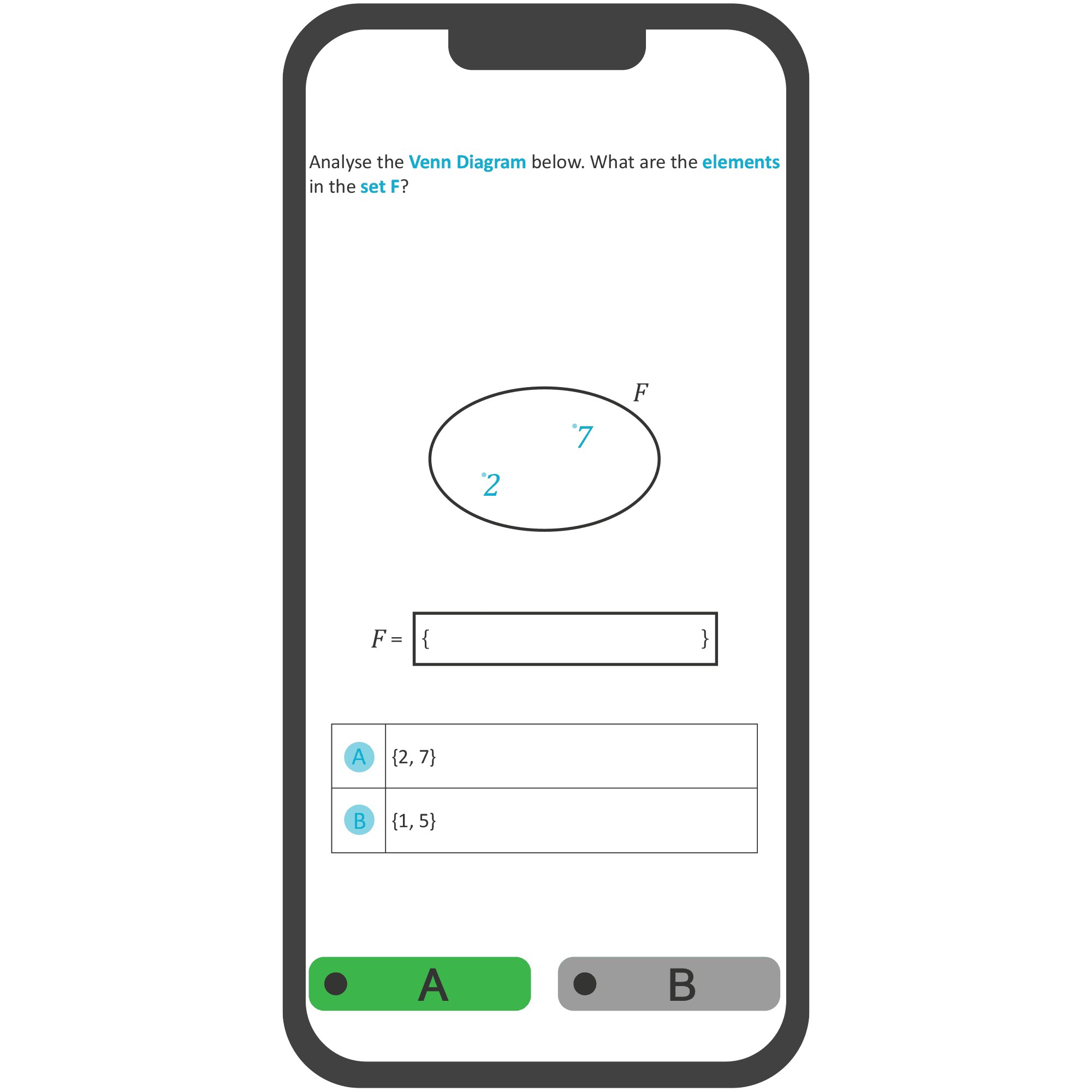
Stage 1 is designed to minimise cognitive load by reducing each decision to a simple, binary choice. Every question presents just two possible answers, and problems are broken into very small, explicit steps so that attention remains on recognising correct reasoning rather than constructing responses.
What appears as a single question may internally consist of several micro-steps, allowing understanding to develop line by line.
This stage reduces anxiety, builds familiarity with concepts, and keeps learners in flow from the outset.
All Phlows currently available in the MVP operate at Stage 1.
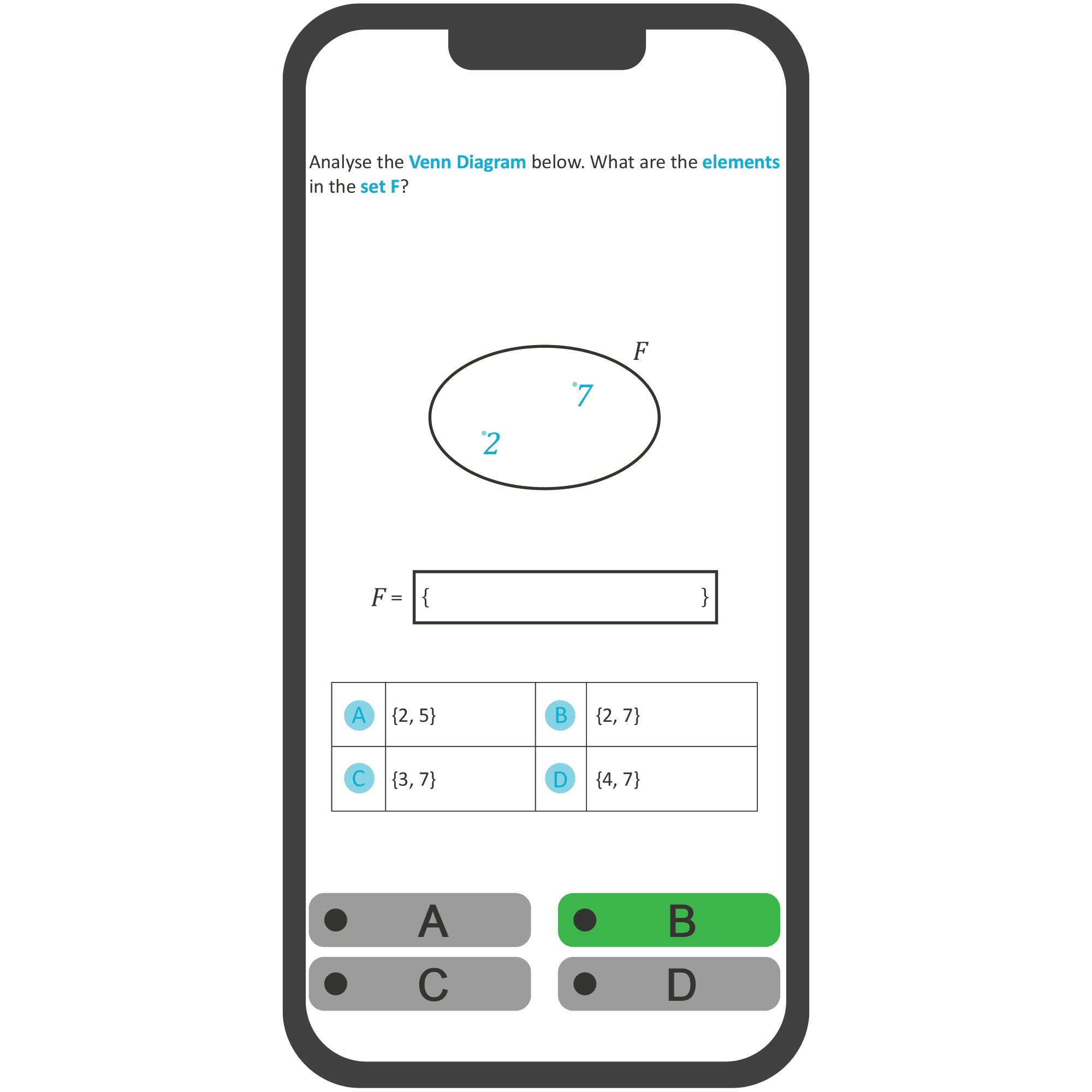
Stage 2 — Structured choice
Stage 2 increases difficulty primarily by expanding the range of answer options, with questions typically offering four choices instead of two. This makes discrimination more demanding, requiring students to compare alternatives more carefully.
In many cases, moving beyond a strict binary choice actually reduces pressure, encouraging more deliberate reasoning and flexible evaluation of options rather than guesswork.
Where appropriate, steps may also be consolidated between stages: a Phlow that previously involved many small, guided micro-steps may present fewer, more integrated decisions. This does not lower cognitive demand, but shifts responsibility toward more connected reasoning.
These adjustments are made on a case-by-case basis.
Stage 2 sharpens decision-making, tests understanding more robustly, and prepares learners for increasingly independent responses.
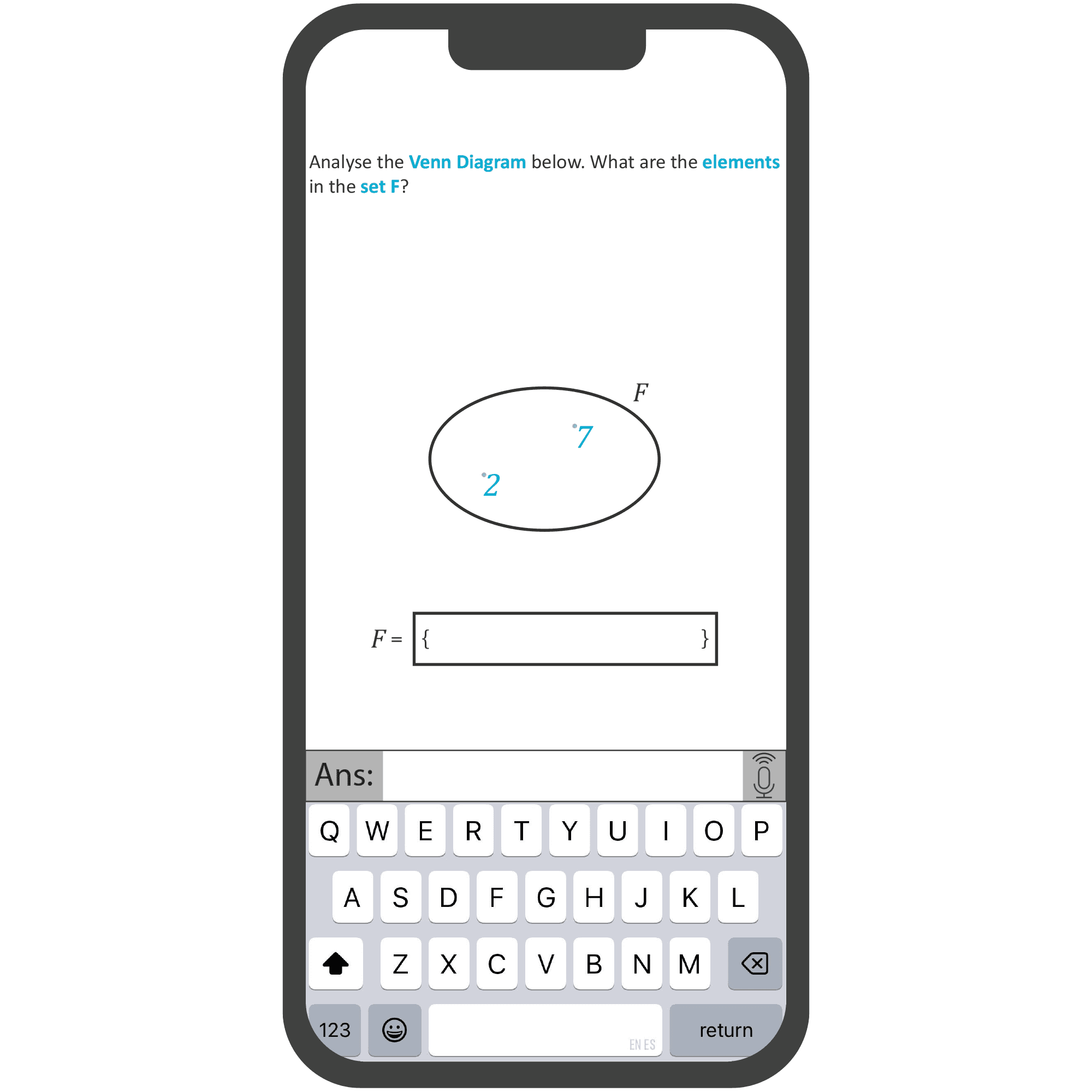
Stage 3 — Constructed response
In Stage 3, students are required to generate their own answers rather than selecting from predefined options. Responses may be typed or spoken and often involve full sentences or extended reasoning, meaning understanding must now be articulated, not merely recognised.
Before submission, AI support may analyse the response, highlight minor issues, or suggest clarifications to improve expression, without providing the answer itself.
At this stage, understanding is evaluated along a spectrum, ranging from incorrect to fully correct, allowing feedback to reflect the quality and completeness of reasoning rather than simple correctness.
Stage 3 strengthens retrieval, exposes fragile understanding, and builds confidence in explanation and independent reasoning.

Stage 4 — Independent reasoning
Stage 4 is the final stage of a Phlow, where understanding must stand entirely on its own. At this point, all prompts, answer options, and visual scaffolding are removed, requiring the student to reason independently and clearly explain their thinking.
Learning at this stage is demonstrated through a focused, structured conversation about the Phlow topic. Before responding, the system outlines what should be considered, describes the problem structure in neutral terms, and sets clear boundaries for the task.
Students may ask clarifying questions, explain their reasoning, and revise their responses in light of feedback, but no answers or hints are provided.
Mistakes are treated as diagnostic signals rather than failures: the system identifies the type of error, revisits the underlying concept, and invites reconsideration.
This mirrors a thoughtful oral assessment, confirming that understanding is deep, transferable, and reliable.